


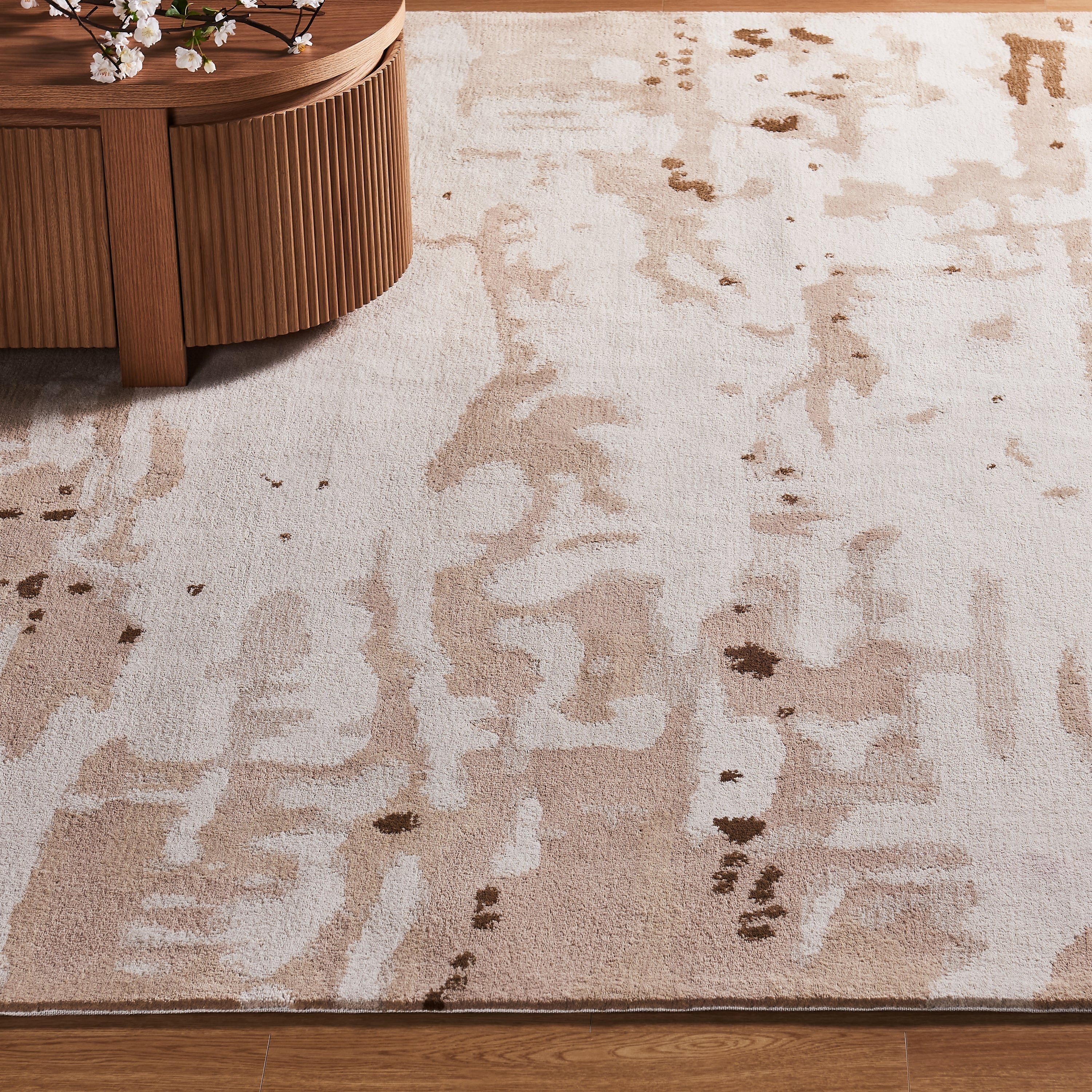
Your cart is currently empty.
I’m Kevin, Houlte’s product manager. After 15 years working with rugs, I’ve learned this: the “right” rug isn’t the most expensive one—it’s the one that fits your room, your routine, and your taste on your worst Monday, not just in perfect photos.
A rug is a movable textile floor covering that adds comfort, protects flooring, and visually anchors a space. Unlike wall-to-wall carpet, a rug can be sized, moved, layered, and replaced without renovation.
| Feature | Rug | Carpet |
|---|---|---|
| Installation | Loose-laid | Fixed / installed |
| Flexibility | Move / layer / swap | Hard to change |
| Design impact | Defines zones + style | Uniform coverage |
| Long-term upkeep | Easier to replace | More commitment |
If you want your room to feel “finished” without locking yourself into one look for years, a rug is usually the better tool.
A rug is like punctuation for furniture. It tells the eye where the “conversation area” begins and ends.
Hard floors are beautiful, but rugs make them livable—especially in living rooms and bedrooms.
A rug reduces echo and “clack,” which is huge in apartments and open-plan spaces.
Think chair legs, pets, and high-traffic paths—rugs take the wear so your floors don’t have to.
In real homes, wool-blend rugs hit a sweet spot: they feel substantial, hold shape well, and bring texture without demanding perfection from you. They’re a practical choice when you want a rug to look better with time instead of worse.
If you want a quick shortcut: pick your rug based on the “vibe” you want the room to have.
Below are six styles from Houlte that cover the most common needs I see: easy-to-style neutrals, texture-forward designs, and patterns that make a room feel intentional without overpowering everything else.
My quick rule: If you’re choosing between two rugs, keep the one that looks good with your room lights off except for a lamp. That’s the one that will feel right day-to-day.
The most common mistake I see is a rug that’s too small. A good rug should connect your furniture, not float in the middle.
If you have pets, kids, or a lot of guests, opt for patterns with movement (etching, marbling, sketch lines). They’re simply easier to live with.
A rug is more than a floor covering—it’s the foundation of how a room feels. Start with size, then pick a texture you’ll enjoy every day. If you want a safe, elevated direction, I’d begin with a wool-blend and choose the pattern based on your lifestyle.
Tip: If you’re between sizes, I almost always recommend sizing up—the room will feel more connected and intentional.
Rugs can be made from wool, cotton, synthetics, or blends. In many homes, wool-blend rugs offer a great balance of comfort, structure, and everyday practicality.
Use furniture as your guide. In living rooms, aim for at least the front legs of the sofa and chairs to sit on the rug. In dining rooms, ensure chairs stay on the rug when pulled out.
Yes—if it’s the right size and made for your lifestyle. A well-chosen rug anchors your room, adds comfort, reduces noise, and helps protect flooring.
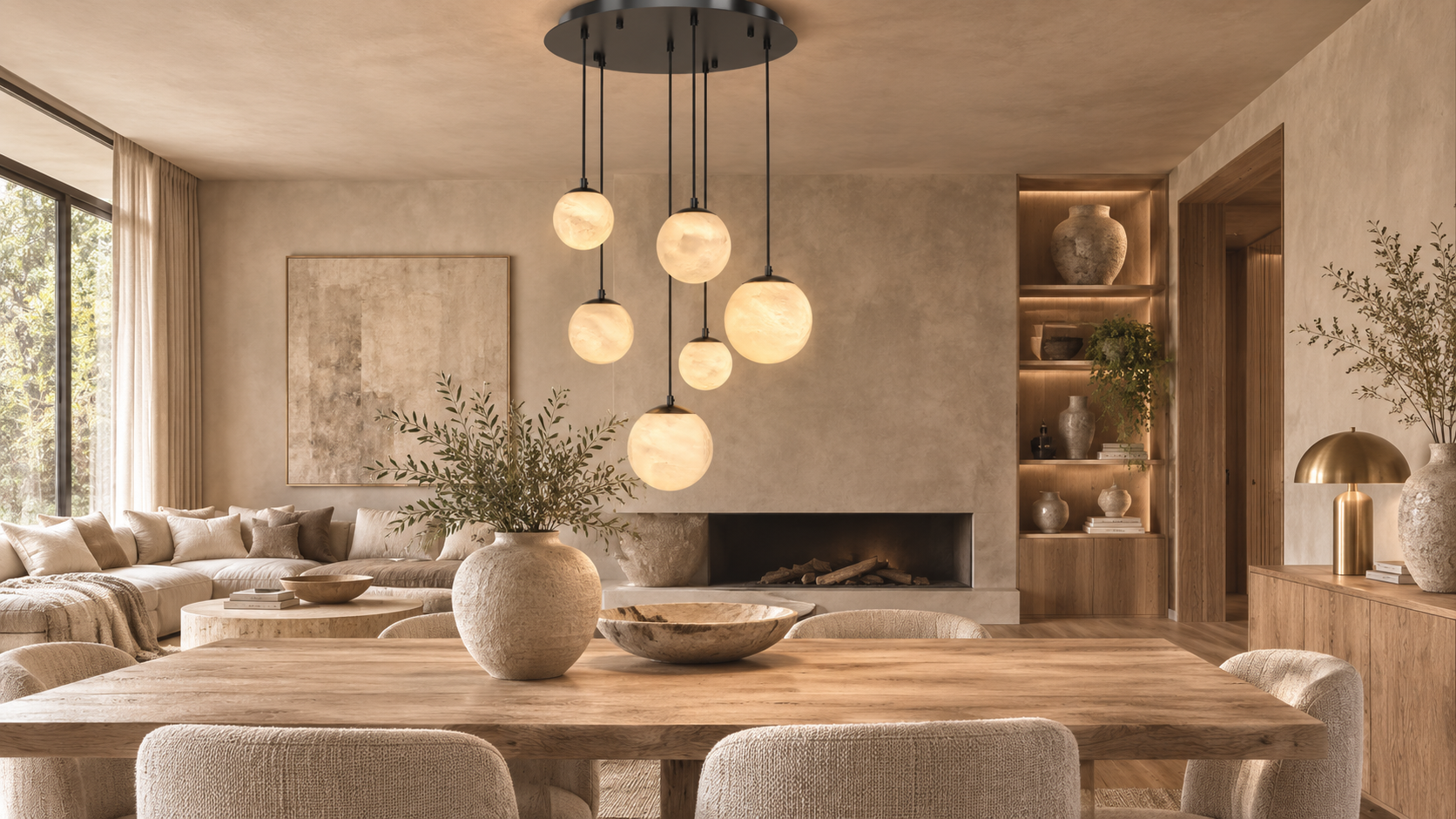
Resin vs. Alabaster Lighting: Which Material Is Right for your Home?
Read moreabout Resin vs. Alabaster Lighting: Which Material Is Right for your Home?
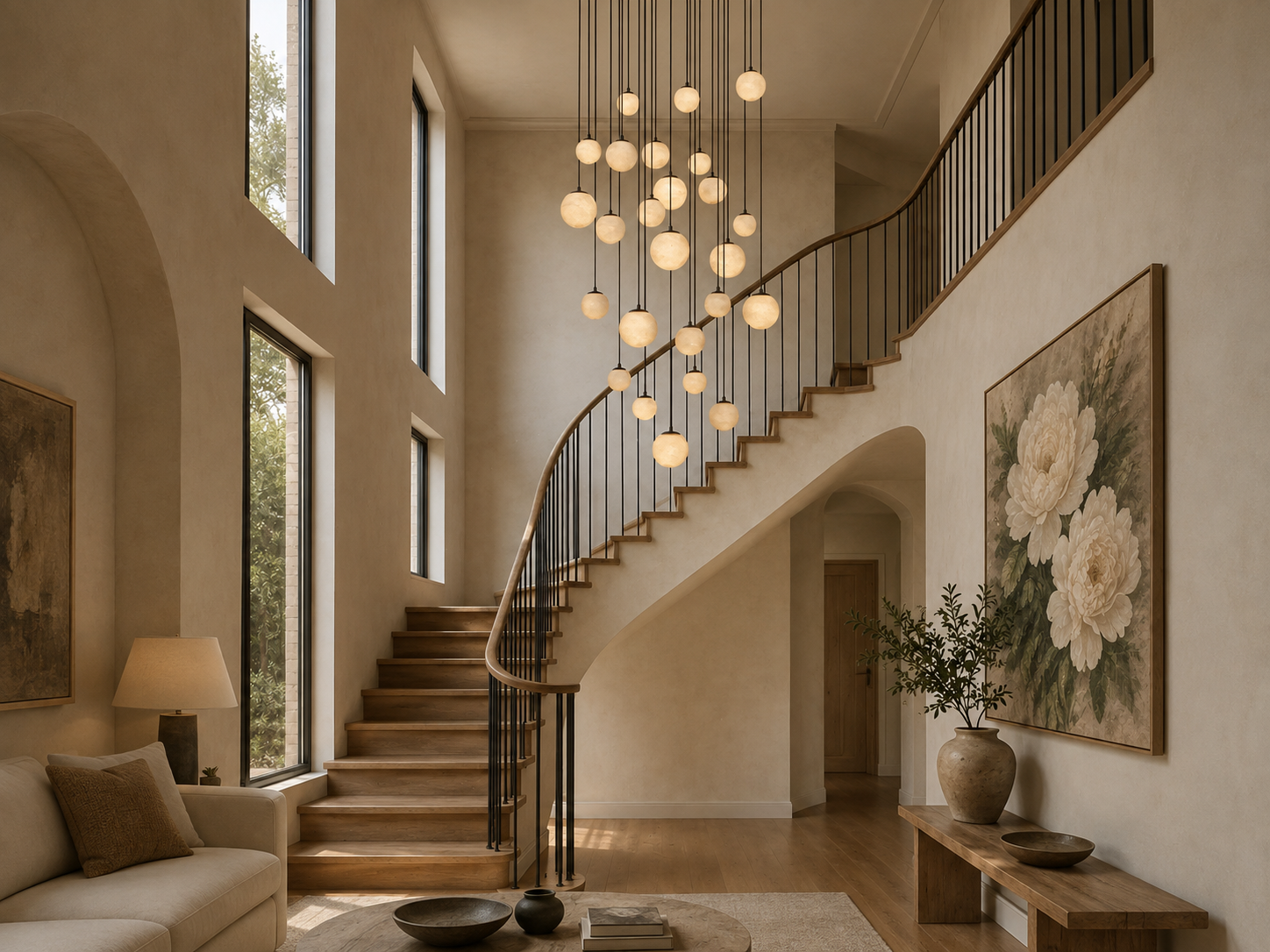
From Sconces to Statement Chandeliers: What Resin Makes Possible
Read moreabout From Sconces to Statement Chandeliers: What Resin Makes Possible
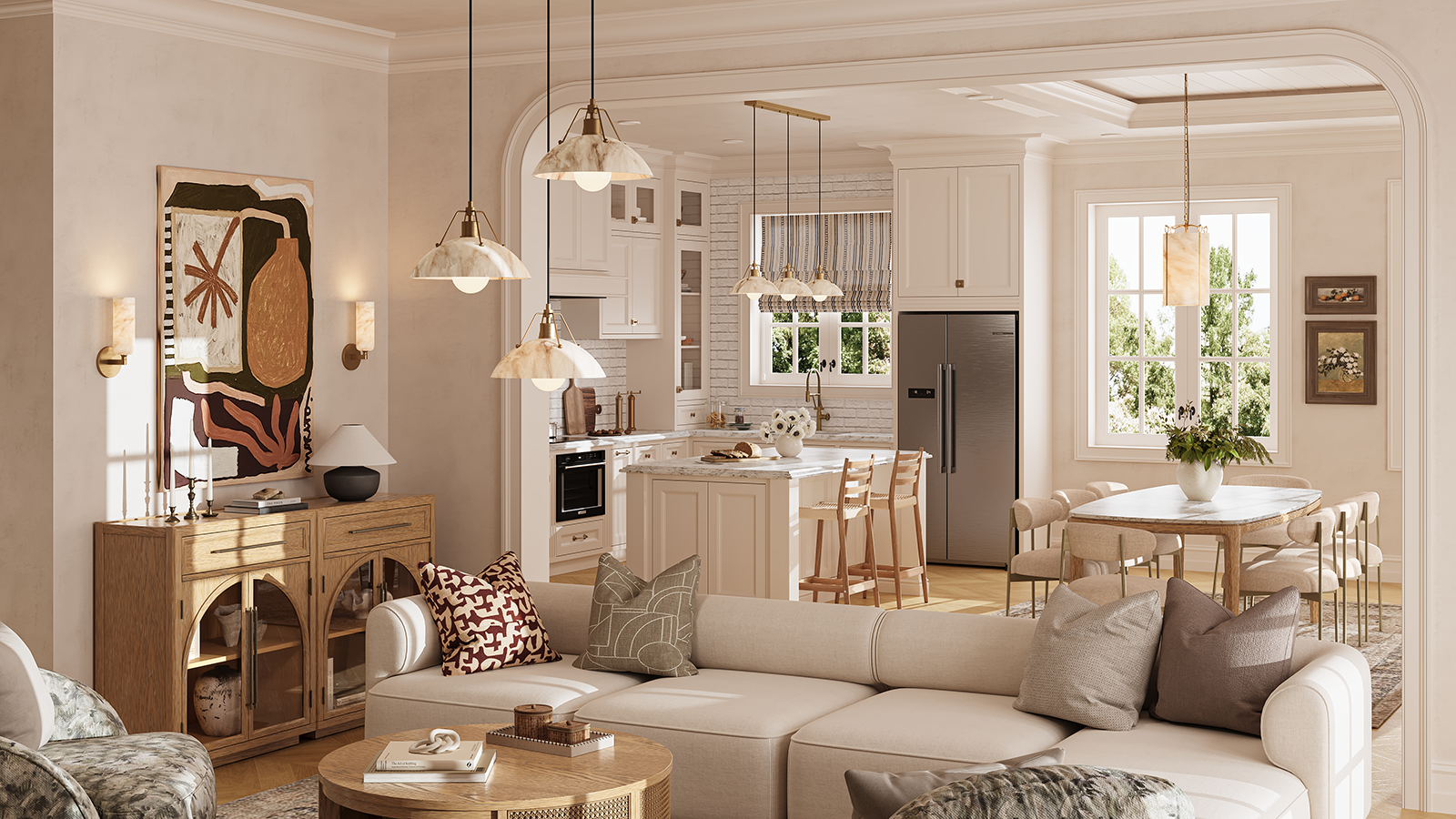
The Case for HOULTE Resin Lighting in Real Homes
Why does HOULTE resin lighting work so well in real homes? Explore its stone-inspired character, practical care, flexible forms, room-by-room applications, and the details to verify before choosing a fixture.
Read moreabout The Case for HOULTE Resin Lighting in Real Homes


Share:
Warm Light, Open Space: A Living Room Refresh with Houlte
Where to Buy Rugs: A Practical Guide to Finding the Right One