


Your cart is currently empty.
Open-concept living and dining rooms feel spacious because they remove physical boundaries, but that openness can make lighting more difficult to plan. One ceiling fixture is rarely enough to make every zone feel comfortable, functional, and visually connected.
The solution is layered lighting: combining different light sources so that each part of the room has the illumination it needs while still feeling like part of one larger interior.
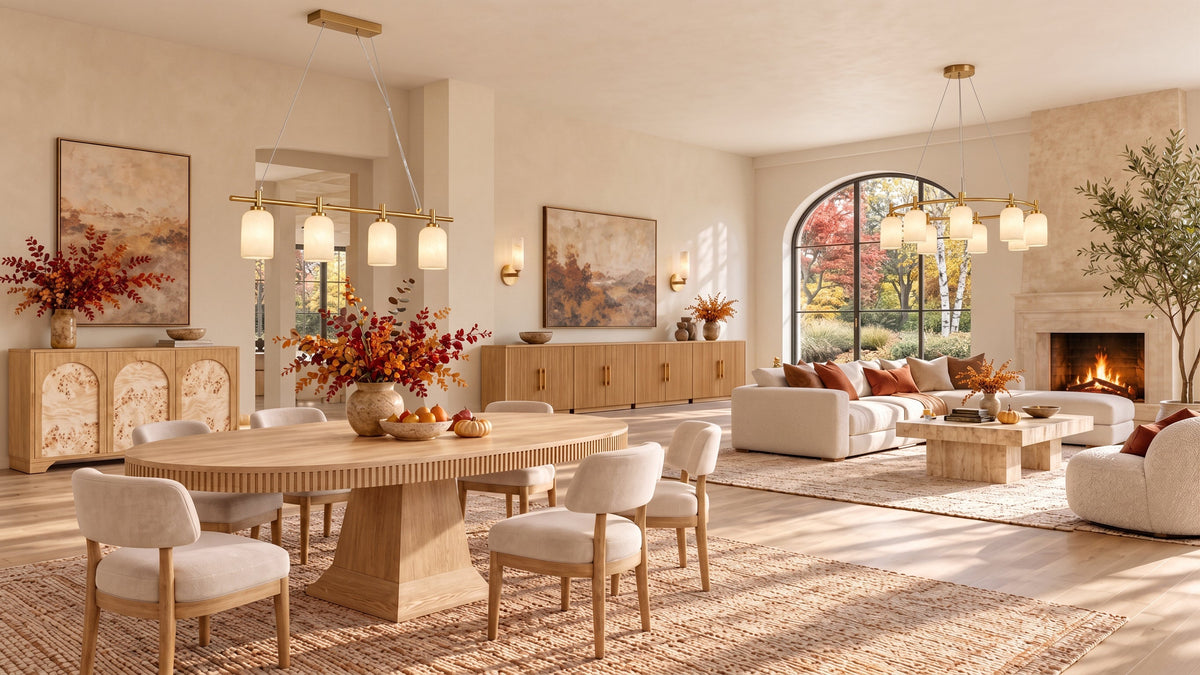
In an open-plan space, a dining chandelier can define the table, a living room fixture can anchor the seating area, wall sconces can add depth, and floor or pendant lights can create softer pools of light for specific activities.
The goal is not to fill the ceiling with fixtures. It is to create enough layers that the room works differently throughout the day and evening.

Layered lighting means using more than one type of light source in the same room. Instead of asking a single chandelier or ceiling light to do everything, different fixtures support different functions.
In a well-lit open-concept home, these layers overlap. The dining chandelier may provide both ambient and task light. A wall sconce can serve as accent lighting while also helping illuminate a darker corner. A floor lamp may support reading while making the living area feel warmer at night.
In an open floor plan, the dining table often has no wall separating it from the living room or kitchen. A chandelier can create that boundary visually.
The fixture establishes a clear center above the table and helps the dining zone feel intentional rather than simply placed in the middle of a large room.
Linear chandeliers are especially useful above rectangular tables because their proportions follow the length of the furniture below. Round fixtures can create a stronger central focal point above circular or compact tables.
The chandelier does not need to match the living room light exactly. In fact, open-concept spaces usually feel more sophisticated when the fixtures coordinate rather than repeat one another.

A linear fixture can visually follow the length of a dining table while the resin material softens the geometry with warmer texture.
Explore Axis Linear Chandelier →If the dining table is defined by a chandelier, the living room should have its own visual anchor.
This does not necessarily mean installing another dramatic statement fixture. The goal is to establish enough presence above the seating area so that the living room feels like a distinct zone within the larger plan.
A round chandelier can work well over a central seating arrangement because it echoes the shape of conversation areas and coffee tables. Ring forms are particularly useful when the room needs visual scale without a dense or heavy silhouette.
The key is hierarchy. If the dining chandelier is highly sculptural, the living room fixture may need to be quieter. If the living room is the visual center of the home, the opposite can be true.

The open ring silhouette provides scale without making the ceiling feel visually crowded, making it useful for living rooms connected directly to dining areas.
Explore Velorian Ring Chandelier →One of the most common problems in open-plan rooms is that all light comes from above.
Even when the ceiling fixtures are bright enough, the room can still feel flat because walls and corners remain comparatively dark.
Wall sconces help solve this by introducing light at a different height. They can frame artwork, illuminate a sideboard, add softness beside a seating area, or create a more welcoming transition between the living and dining zones.
This vertical variation is important because layered lighting is not only about having more fixtures. It is also about placing light at different levels throughout the room.

A compact resin wall sconce can add warm accent light while repeating material language from larger ceiling fixtures without making every light identical.
Explore Axis Wall Sconce →Open rooms often contain smaller functional areas within the larger layout: a breakfast counter, reading corner, side table, bar area, or transition zone.
A compact pendant can define these smaller areas without competing with the main chandeliers.
This is where scale matters. A small pendant should support the larger lighting plan rather than becoming another dominant statement.
Materials can help create continuity. For example, a resin pendant may relate to a resin chandelier elsewhere in the room while still having a different shape and role.

A compact pendant can bring focused light to a smaller zone while contributing another layer to the room without adding visual clutter.
Explore Arlo Resin Pendant →Floor lamps are especially valuable in open-concept living rooms because they bring light down to human level.
During the day, the room may receive enough natural light that only overhead fixtures are needed. At night, however, relying only on ceiling lights can make a large space feel too bright and exposed.
A floor lamp beside a sofa or reading chair creates a smaller, more intimate pool of light. It also makes it possible to illuminate the living area without turning on every chandelier in the room.
Textured glass, fabric, or softly diffused materials can make this lower layer feel especially comfortable.

A floor lamp adds a lower lighting layer that can make a living room feel more relaxed while reducing dependence on bright overhead illumination.
Explore Nerisse Floor Lamp →They do not need to be identical.
In fact, using the exact same fixture repeatedly can make an open-concept space feel more like a showroom than a home.
A better approach is to choose one or two design characteristics that repeat across the room.
Open-concept lighting feels most intentional when different fixtures share a visual language without looking like a matching set.
Color temperature has a major effect on whether separate lighting zones feel connected.
If the dining chandelier produces very warm light while the living room uses noticeably cooler illumination, the boundary between the spaces can feel abrupt even when the furniture and materials coordinate.
For living and dining areas designed for relaxation and entertaining, warm white lighting generally creates a more comfortable atmosphere than harsh cool light.
Exact brightness can vary from fixture to fixture, but keeping the overall warmth consistent helps the entire open room read as one environment.
From there, adjust the balance based on how the room is actually used. A reading-focused living room may need more floor lighting, while a home used frequently for entertaining may benefit from additional sconces or dimmable accent sources.
Combine ambient lighting from chandeliers or ceiling fixtures with task lighting for specific activities and accent lighting from sconces, pendants, or floor lamps.
They do not need to match exactly. Repeating materials, finishes, shapes, or color temperature usually creates a more natural sense of continuity.
Yes. The fixtures can differ in shape and scale as long as they share enough design language to feel intentional together.
Overhead light may not adequately illuminate walls, corners, and lower areas. Adding sconces, table lamps, or floor lamps creates more even visual depth.
Warm white lighting is commonly used in living and dining spaces because it creates a softer, more comfortable atmosphere for relaxing and entertaining.
There is no fixed number, but strong visual hierarchy is important. Let one or two fixtures lead and use quieter lighting layers to support them.
Chandeliers establish major zones, wall sconces add depth, smaller pendants support functional areas, and floor lamps make the room more comfortable at night.
When those layers share a consistent material language and light temperature, the living and dining areas can feel distinct without losing the openness that makes the floor plan appealing in the first place.
Explore Houlte Lighting →
How to Layer Lighting in an Open-Concept Living and Dining Room
Learn how to layer ambient, task, and accent lighting in an open-concept living and dining room, with tips for chandeliers, wall sconces, pendants, floor lamps, and warm lighting balance.
Read moreabout How to Layer Lighting in an Open-Concept Living and Dining Room
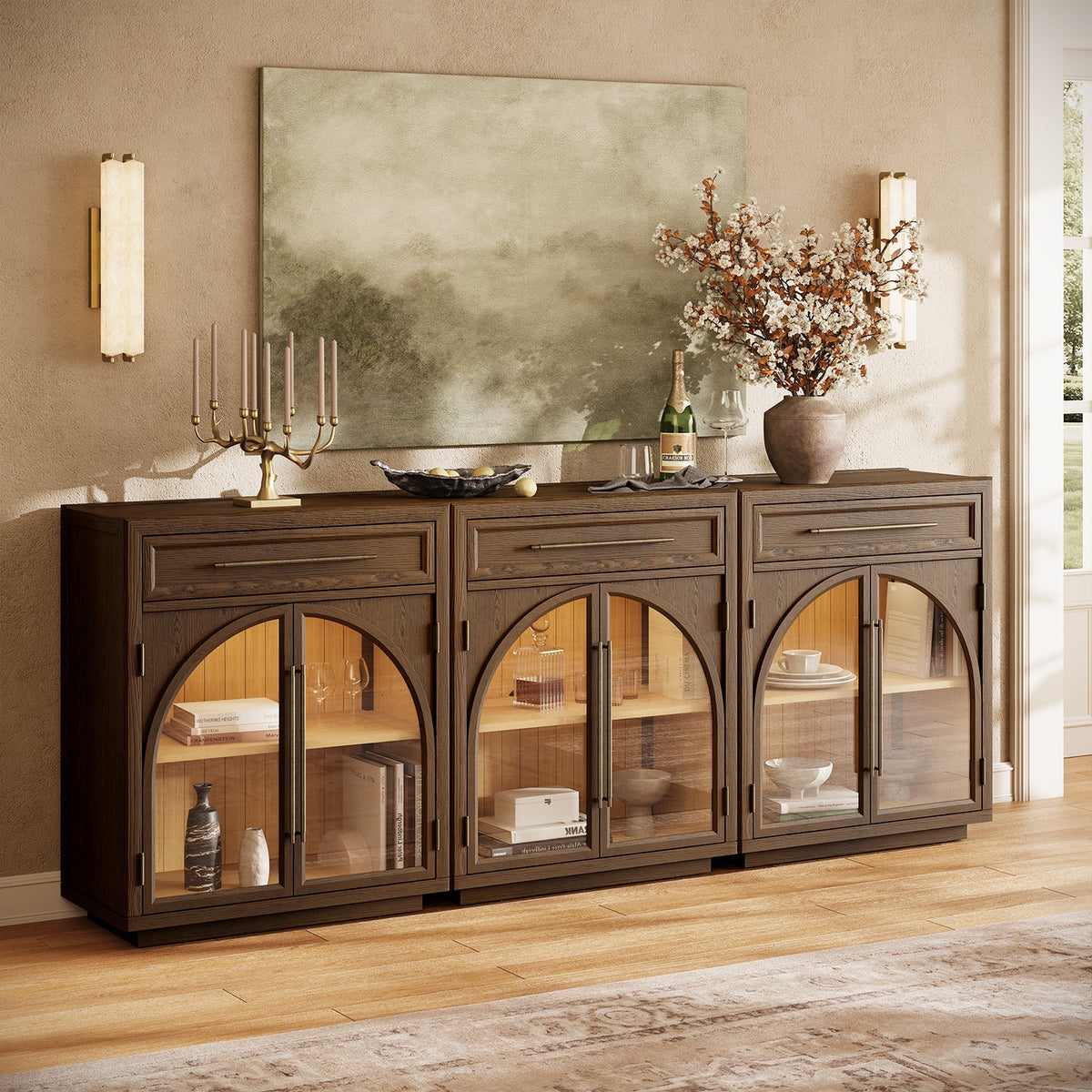
How to Choose a Sideboard for Your Dining Room: Size, Storage, and Style
Learn how to choose the right dining room sideboard, including size, height, storage, placement, and styling tips for creating a functional and balanced dining space.
Read moreabout How to Choose a Sideboard for Your Dining Room: Size, Storage, and Style
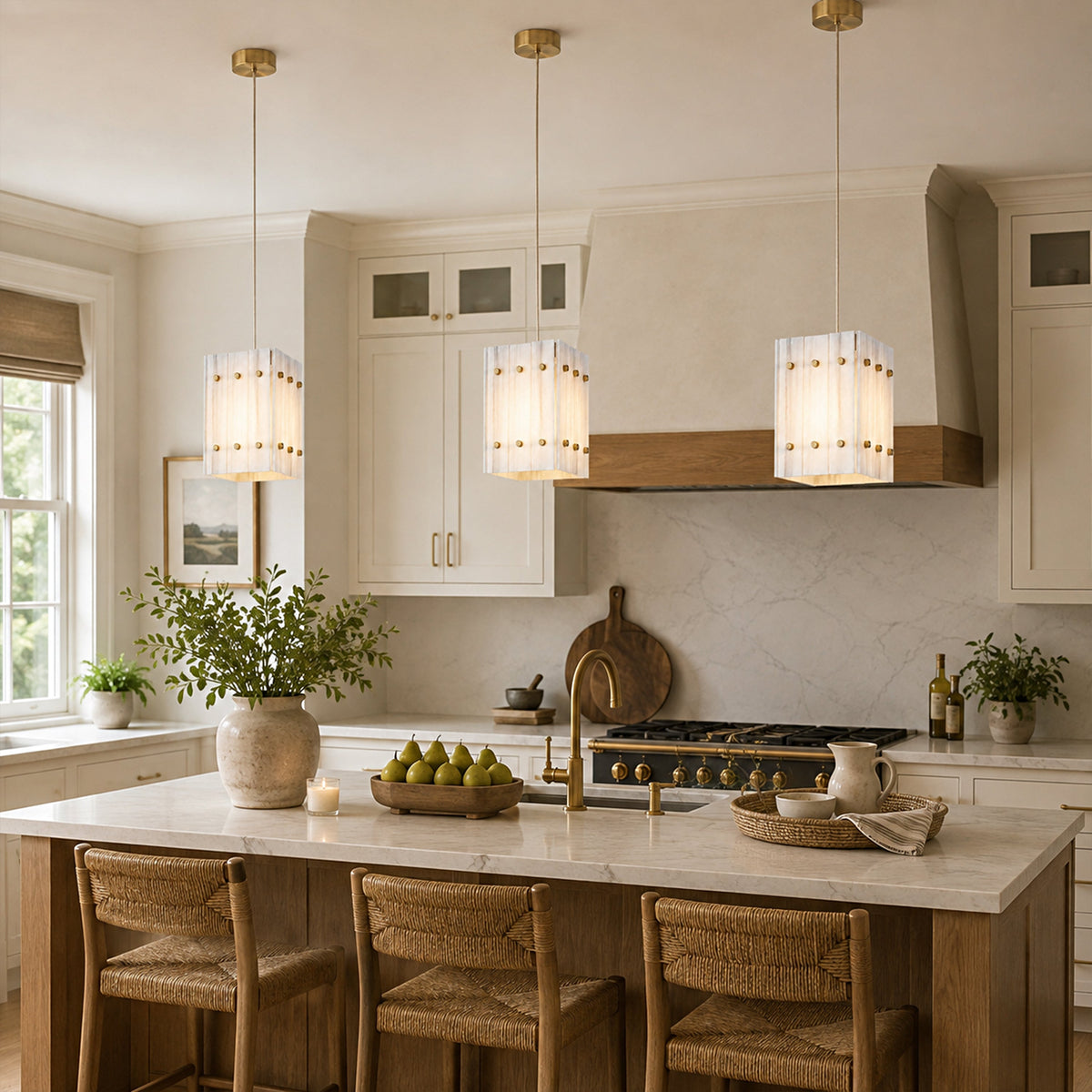
Marble Pendant Lighting Ideas for Kitchens, Bedrooms, and Small Spaces
Discover how to use marble pendant lighting in kitchen islands, bedrooms, small dining areas, and compact spaces, with tips for scale, spacing, stone patterns, and modern styling.
Read moreabout Marble Pendant Lighting Ideas for Kitchens, Bedrooms, and Small Spaces
Share:
How to Choose a Sideboard for Your Dining Room: Size, Storage, and Style