


Your cart is currently empty.
Linear marble chandeliers are especially well suited to spaces built around long horizontal surfaces. Above a kitchen island, they can visually connect the entire counter. Above a rectangular dining table, they can make the lighting feel proportionate to the furniture rather than concentrated in one small area.
What makes marble especially effective in a linear fixture is the contrast between shape and material. The silhouette is clean and architectural, while the stone introduces organic veining, tonal shifts, and natural variation.
That combination makes linear marble lighting a strong choice for modern kitchens, open-concept interiors, dining rooms, and spaces where the fixture needs to feel substantial without becoming overly ornate.
The key is choosing the right length, hanging height, stone color, and visual weight for the surface below it.

Kitchen islands are naturally horizontal. A long countertop creates a strong visual line through the room, which means the light fixture above it needs enough width to feel connected to that form.
A single compact pendant or small central chandelier can sometimes feel disconnected from a large island. Linear chandeliers solve that problem by extending across more of the counter and creating a clearer relationship between lighting and architecture.
This is particularly useful in large kitchens where the island functions as more than a preparation surface. It may also be used for breakfast, casual dining, entertaining, or as the visual center of an open-concept room.
In that situation, the chandelier does not simply illuminate the countertop. It helps define the entire island zone.
It can work beautifully above either one, but the visual goal is slightly different.
Above a kitchen island, the chandelier often has to relate to cabinetry, countertops, appliances, and architectural finishes. The fixture becomes part of a larger kitchen composition.
Above a dining table, the goal is usually more intimate. The chandelier helps create a defined gathering area and visually connects the ceiling to the furniture below.
One of the most important decisions is choosing a chandelier that is long enough to relate to the surface below it.
A fixture that is dramatically shorter than a large kitchen island can look visually lost. On the other hand, a chandelier that nearly reaches the full width of the counter may feel crowded or too dominant.
The goal is to create a clear relationship without making the fixture and surface look like exact copies of each other.
Think about the usable counter length, not simply the total room width. The chandelier should appear centered above the main island surface and leave visual space at both ends.
The same principle applies. A linear chandelier should span enough of the table to create balance, while still leaving breathing room around the ends.
A larger open-plan kitchen may require more visual presence than a compact room. In these interiors, chandelier length, stone density, and suspension height all influence whether the fixture feels properly scaled.
A fixture that looks large on a product page can feel surprisingly small once it is installed above a long island in a spacious kitchen.

Hanging height is just as important as chandelier length. The fixture should feel connected to the island without interfering with the way the kitchen is used.
If the chandelier hangs too high, it may appear disconnected from the countertop and lose its visual relationship with the island.
If it hangs too low, it can interrupt sightlines across the kitchen or become visually intrusive while people are standing, cooking, or talking across the counter.
The right height depends on the depth of the fixture, ceiling height, island dimensions, and the overall openness of the room.
In open-concept spaces, it is also useful to step back and view the chandelier from the adjacent living or dining area. A height that looks correct from directly beneath the fixture may appear different when viewed across the room.
Linear chandeliers make stone color especially noticeable because the material is distributed across a wider horizontal span.
Choosing between white, blue, or green marble is therefore not only about personal preference. The stone can change the entire mood of the kitchen or dining area.
The stone does not need to match the countertop exactly. In fact, slight contrast can make the lighting feel more intentional. Coordinating undertones is often more important than choosing identical materials.

One reason marble works particularly well in a linear chandelier is that the extended shape gives the stone more room to become part of the design.
On a small pendant, marble may appear mainly as a color or material detail. On a longer fixture, veining and tonal variation can create a visible rhythm across the chandelier.
This helps balance the clean geometry of the linear shape.
From a distance, the fixture may look structured and architectural. Up close, the natural stone reveals irregular pattern, movement, and depth.
That contrast is especially valuable in modern kitchens, where cabinetry, islands, and built-in elements often rely on straight lines and repeated geometry.
Open-concept interiors create a unique challenge: the kitchen island, dining table, and living room are visible at the same time.
Lighting can help organize those zones without adding physical walls.
A linear marble chandelier above the island creates a strong horizontal anchor. If the dining room is nearby, the two lighting zones should feel related but do not need to match exactly.
One effective strategy is to repeat one design element rather than the entire fixture. That could be the same metal finish, a related stone tone, or similar proportions.
This creates continuity while allowing each space to retain its own identity.

The Pietra series includes several linear marble chandelier designs with different stone colors and silhouettes. These differences can significantly change how the fixture feels within a kitchen or dining space.
The disc-based silhouette creates a softer rhythm across the length of the fixture. White marble keeps the overall look light, making this design particularly easy to integrate into bright kitchens, neutral interiors, and spaces with pale stone countertops.
Explore White Marble Disc Linear Chandelier →Blue marble brings more visible color into the room while maintaining the material richness of natural stone. It can work especially well when the island is otherwise restrained and the chandelier is intended to become a stronger focal point.
Explore Blue Marble Linear Chandelier →A cleaner white marble linear design works well in kitchens where the goal is architectural presence without strong color contrast. The neutral stone can coordinate with a wide range of cabinetry, countertop, and furniture finishes.
Explore White Marble Linear Chandelier →Green marble introduces deeper natural color and works particularly well in richer interiors. Pair it with walnut, brass, cream stone, warm neutrals, or darker cabinetry for a more layered kitchen or dining environment.
Explore Green Marble Disc Linear Chandelier →Yes. A linear chandelier can work especially well above a long island because its horizontal proportions follow the counter and help define the entire kitchen zone.
It depends on the design goal. Several pendants create repeated points of light, while one linear chandelier creates a more continuous architectural statement.
Yes. The stones do not need to match exactly. Coordinating undertones and balancing the amount of visible pattern often creates a more natural result.
White marble is highly versatile and works well in modern kitchens, but blue and green marble can also create strong contemporary interiors when the surrounding palette supports them.
Yes. Linear marble chandeliers are also well suited to rectangular dining tables, particularly when the fixture length feels proportionate to the table below.
The clean horizontal form of a linear chandelier makes it especially useful above kitchen islands and rectangular dining tables. Marble adds the natural variation that keeps that structure from feeling too rigid.
By choosing the right scale, hanging height, stone color, and surrounding materials, a linear marble chandelier can become a defining element of the room while still feeling integrated into the larger interior.
Explore Pietra Marble Lighting →
How to Choose a Linear Marble Chandelier for a Kitchen Island or Dining Table
Learn how to choose a linear marble chandelier for a kitchen island or dining table, including sizing, hanging height, stone color, open-concept styling, and modern lighting ideas.
Read moreabout How to Choose a Linear Marble Chandelier for a Kitchen Island or Dining Table
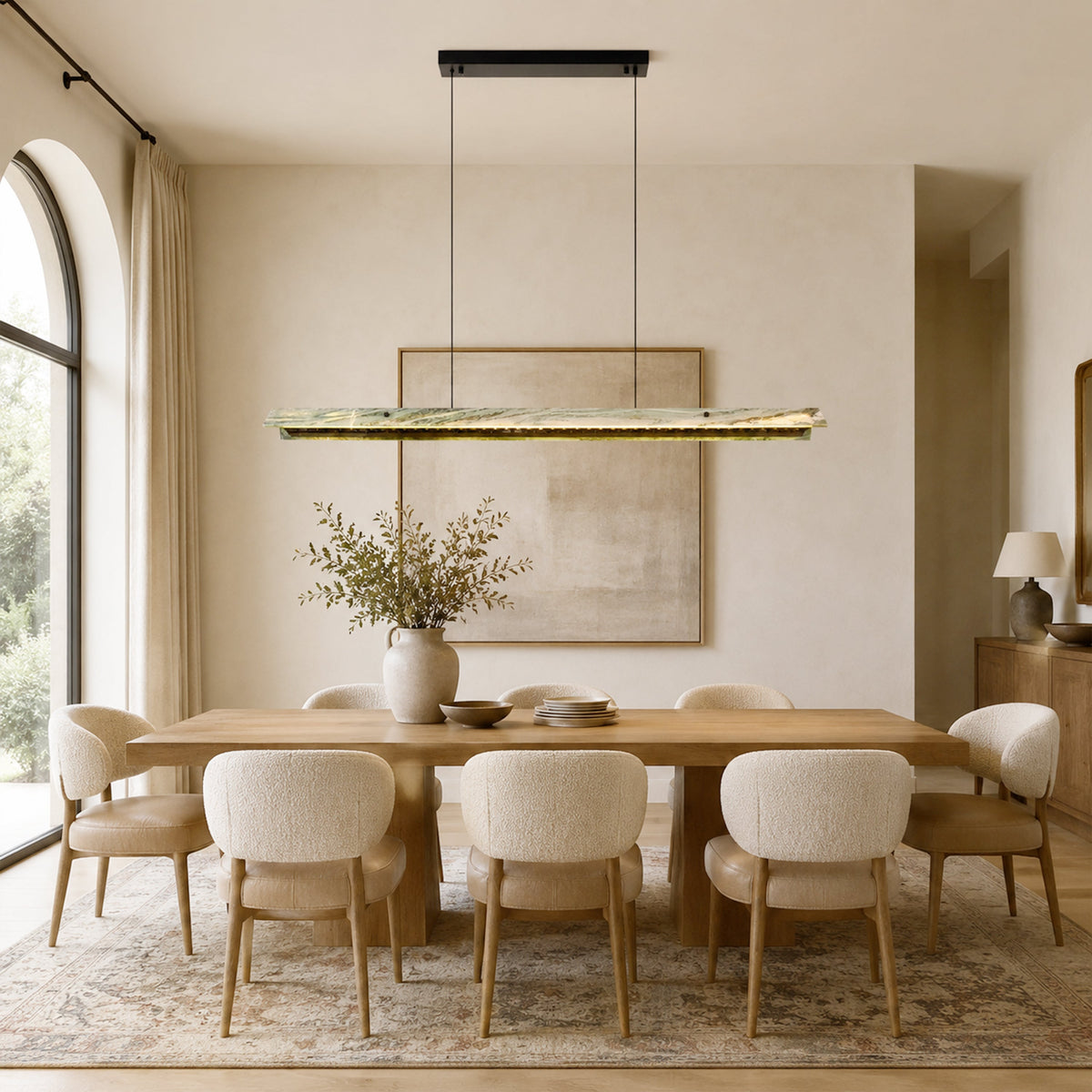
How to Choose a Marble Chandelier for Your Dining Room
Learn how to choose the right marble chandelier for your dining room, including round vs. linear designs, scale, ceiling height, stone pattern, and styling ideas for modern interiors.
Read moreabout How to Choose a Marble Chandelier for Your Dining Room
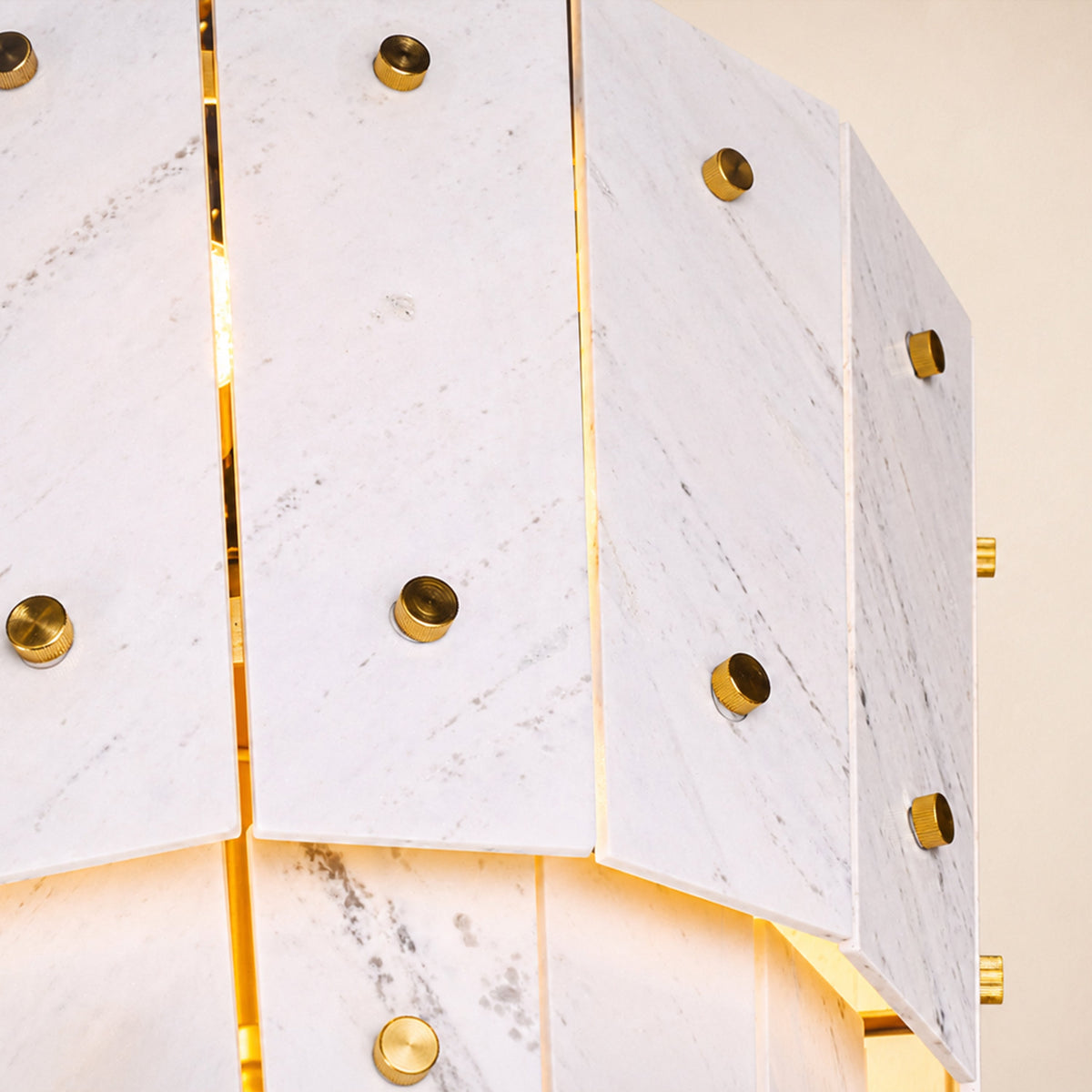
How Marble Lighting Brings Natural Luxury Into Modern Homes
Discover how marble lighting brings natural texture, warm illumination, and timeless luxury into modern homes, with styling ideas for dining rooms, living spaces, bedrooms, and entryways.
Read moreabout How Marble Lighting Brings Natural Luxury Into Modern Homes
Share:
How to Choose a Marble Chandelier for Your Dining Room