


Your cart is currently empty.
During the holidays, a dining table has to do much more than handle everyday meals. It becomes a place for serving dishes, extra place settings, conversations that last for hours, and guests who may not normally sit around the table together.
That is why choosing a dining table for entertaining requires a slightly different approach from choosing one for daily use.
The right table needs enough seating, but it also needs space for serving dishes, drinks, centerpieces, and comfortable movement around the room. Shape, width, length, material, and chair size all affect how well the dining area works when the guest list grows.
Instead of asking only, “How many people can this table seat?”, it helps to ask a better question: “How comfortably can this table host the way we actually gather?”

Many dining tables are purchased around everyday household size. That makes sense for daily use, but it can create problems during Thanksgiving, Christmas, New Year gatherings, birthdays, and dinner parties.
A household of four may regularly host six or eight people. If entertaining is important, that peak guest count should influence the table choice.
That does not mean buying the largest table that can physically fit in the room. Oversized furniture can make everyday circulation difficult. Instead, look for the point where seating capacity and comfortable room clearance remain balanced.
Seating capacity is never completely universal because chair size and table construction vary, but general dimensions can provide a useful starting point when planning a holiday dining room.
The most important point is that advertised seating capacity should be treated as a starting reference rather than a guarantee of holiday comfort.
Table shape influences much more than style. It affects how guests see one another, how food is passed, how the table fits into the room, and how easily additional chairs can be added.
Neither shape is automatically better for entertaining. The best option depends on room proportions and the type of gathering.
Round tables often create a more conversational, intimate atmosphere, while rectangular tables tend to provide greater flexibility when the guest list becomes larger.

A round table can be especially appealing for smaller holiday gatherings because the shape keeps conversation visually connected and avoids the rigid head-of-table arrangement created by many rectangular tables.
Explore Doric Dining Table →Rectangular dining tables remain one of the most practical choices when entertaining larger groups.
Their length creates a natural arrangement for multiple place settings while leaving a central zone for serving dishes, candles, greenery, flowers, or seasonal table décor.
They also work particularly well in long dining rooms because the furniture follows the proportions of the architecture.
For holiday hosting, width deserves attention too. A long but very narrow table may technically seat many people while leaving limited room for shared dishes in the center.

An 84-inch rectangular table provides the horizontal presence needed for larger gatherings while creating a strong central anchor in a dedicated dining space.
Explore Calma Dining Table →One of the biggest challenges when choosing dining furniture is that everyday needs and holiday needs can be very different.
A table sized for Thanksgiving dinner may feel unnecessarily large for a household of two or four during the rest of the year.
This is where extendable tables become especially useful. They allow the dining room to remain proportionate during ordinary weeks while creating additional seating when guests arrive.
Before choosing an extendable design, measure the room based on its fully extended size rather than only its everyday configuration. The table still needs enough clearance for chairs and walking space when opened.

An extendable table offers flexibility when the dining room needs to move between everyday meals and larger gatherings without permanently occupying the maximum amount of floor space.
Explore Ansel Dining Table →A table is not truly the right size if guests cannot comfortably move around it.
During a holiday meal, chairs are pulled out repeatedly, people move between the kitchen and dining room, and dishes may be carried around the perimeter of the table.
That means circulation matters more during entertaining than it might during an ordinary weeknight dinner.
One of the easiest mistakes to make when evaluating seating capacity is focusing only on whether plates and chairs physically fit.
Holiday tables usually hold much more.
Serving bowls, platters, wine glasses, water, bread, candles, floral arrangements, and seasonal decorations can quickly occupy the center of the table.
A table that feels perfectly adequate for six people on an ordinary evening may suddenly feel crowded when a full holiday meal is served family-style.
When entertaining is a priority, leave enough surface area for both guests and the things that make the meal feel generous and relaxed.
Material changes both the appearance and atmosphere of a holiday dining room.
Wood naturally brings warmth into the room and works well with seasonal greenery, linen, ceramic tableware, candles, brass, and other tactile materials.
Visible grain also means the table can remain visually interesting even when the holiday decorations are removed.
Stone can create a stronger focal point and often gives the dining room a more formal or architectural character. It pairs particularly well with simple table settings that allow the surface itself to remain visible.
Glass visually occupies less space, which can be useful in compact rooms or interiors where the dining area already contains several substantial furniture pieces.
The best choice is not simply the most luxurious-looking material. It is the one that supports your existing room, maintenance expectations, and entertaining style.

Two dining tables can have similar tabletop dimensions and still feel very different once people are seated.
Traditional four-leg tables may limit where chairs can sit near the corners. Trestle designs create different restrictions. Pedestal bases can often provide greater flexibility around the perimeter because guests are not competing for space with four separate legs.
This matters particularly with round tables, where a central base can help maintain the conversational advantages of the shape while reducing interference beneath the tabletop.
When possible, look beyond the tabletop dimensions and consider where guests' knees and chair legs will actually go.

Round dining tables are especially effective when the goal is to make the meal feel conversational.
With no traditional “head” of the table, guests face inward toward one another, which can make smaller holiday dinners feel more social and connected.
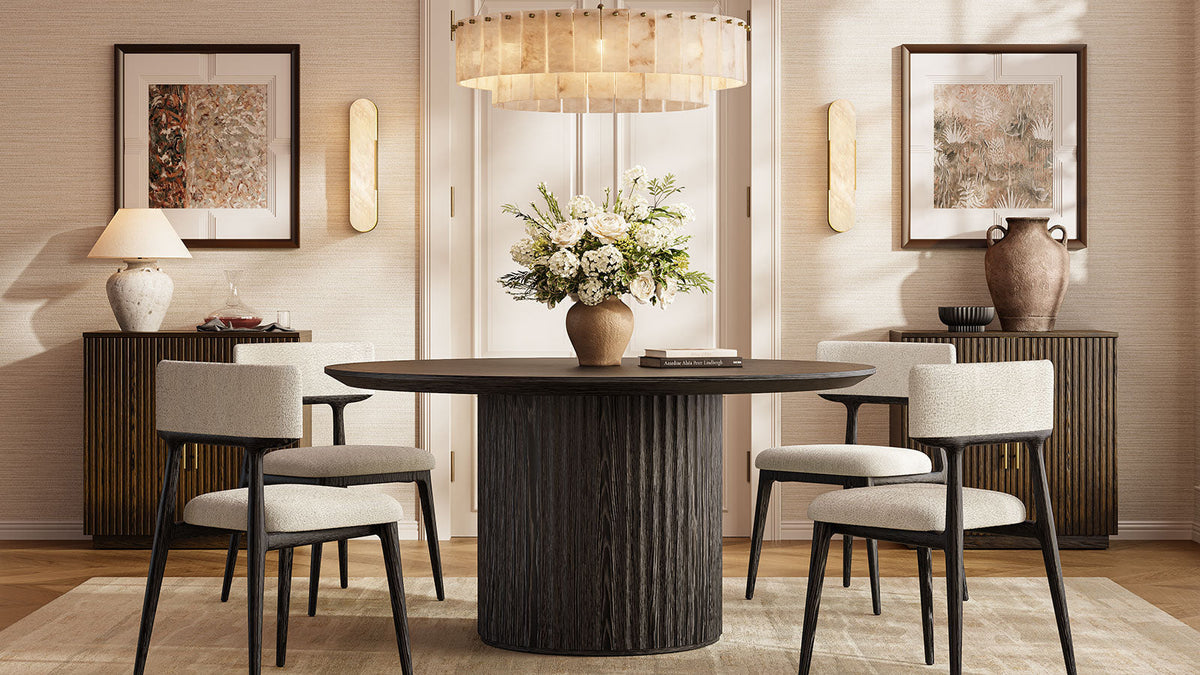
A substantial round design also creates a strong visual center in the dining room, particularly when paired with a chandelier positioned directly above it.
The room itself should still guide the decision. Round tables generally work best where there is enough balanced clearance around the full circumference.
A 60-inch round table provides a generous central gathering point while the fluted base adds texture without interrupting the clean circular silhouette.
Explore Aurelius Dining Table →Holiday hosting often moves into the evening, which makes the relationship between the table and lighting especially important.
A dining chandelier should visually relate to the size and shape of the table below it.
Long rectangular tables often pair naturally with linear fixtures, while round tables can work particularly well beneath round chandeliers or centralized pendant compositions.
Light placement matters too. A fixture that hangs too low can interrupt sightlines across the table, while one positioned too high may lose the sense of intimacy that makes dining lighting effective.
For holiday dinners, warm and softly diffused light can help create a more inviting atmosphere while allowing food, tableware, and natural materials to remain visually rich.
Seasonal decorating can make a dining table feel special, but the table still needs to function.
Very tall floral arrangements can block eye contact. Oversized greenery can compete with serving dishes. Too many decorative objects can leave nowhere to put food.
A better approach is to keep holiday styling lower, simpler, and easier to move.
The ideal size depends on table shape, chair width, and leg placement. Medium round and rectangular tables can both work well for six when there is enough personal space and room for serving pieces.
Round tables encourage conversation and can work especially well for smaller gatherings. Rectangular tables generally provide more flexibility for larger groups and longer dining rooms.
Leave enough room for chairs to pull out comfortably and for guests to move around the table without colliding with walls, sideboards, or other furniture. Exact requirements depend on the room and furniture dimensions.
Seating capacity varies depending on chair width, table-base design, and the amount of personal space desired. A 60-inch round table is generally intended for a medium-size gathering rather than a very large group.
Yes. They are particularly useful when everyday household size is much smaller than the number of people invited for holidays and special occasions.
There is no single best material. Wood creates warmth, stone offers visual presence, and glass can make a dining area feel lighter. The right choice depends on the room, maintenance expectations, and how the table is used.
Use lower centerpieces, leave open serving areas, repeat a small number of materials or colors, and allow some of the tabletop itself to remain visible.
It creates room for serving dishes, conversation, movement, and the extra people who make seasonal gatherings memorable.
Start with your real guest count, choose a shape that suits the room, leave enough clearance around the furniture, and think about how the tabletop will function once a full meal is served.
When those practical decisions are right, styling the table for the holidays becomes much easier.
Explore Houlte Dining Tables →
How to Choose a Dining Table for Holiday Hosting
Learn how to choose the right dining table for holiday hosting, including table size, seating capacity, round vs. rectangular shapes, clearance, materials, and space for serving.
Read moreabout How to Choose a Dining Table for Holiday Hosting
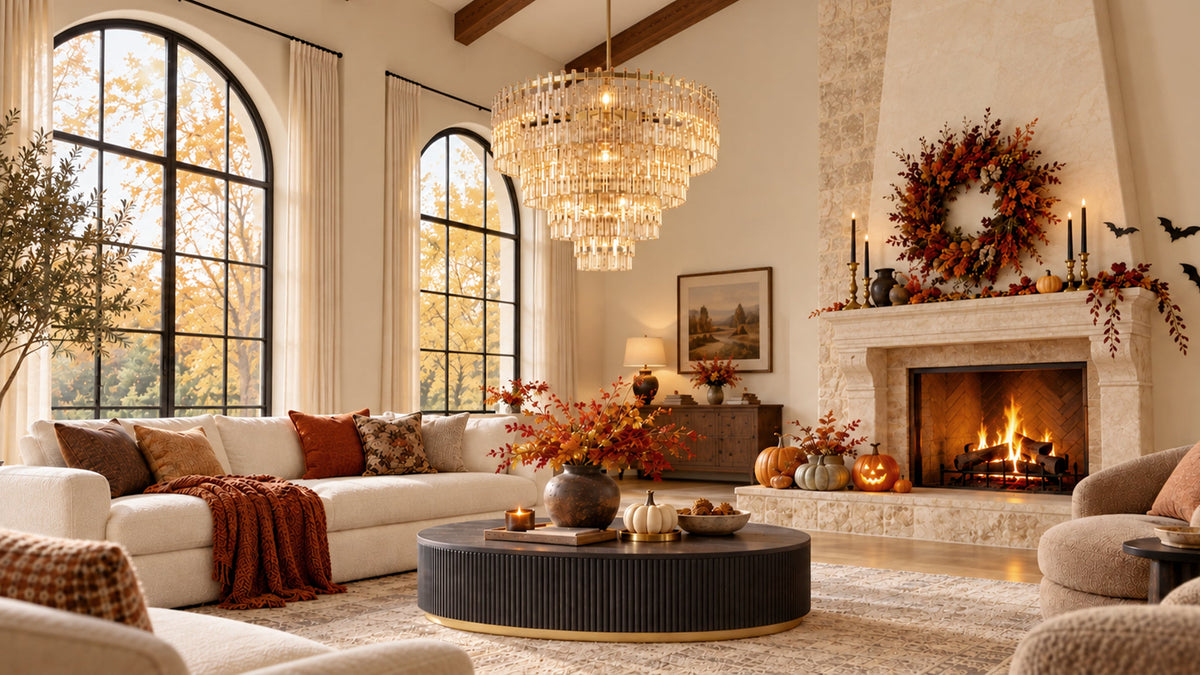
How to Choose Warm Lighting for Fall and Winter Interiors
Learn how to create warmer fall and winter interiors with layered lighting, 2700K vs. 3000K color temperatures, chandeliers, wall sconces, table lamps, and softly diffused materials.
Read moreabout How to Choose Warm Lighting for Fall and Winter Interiors
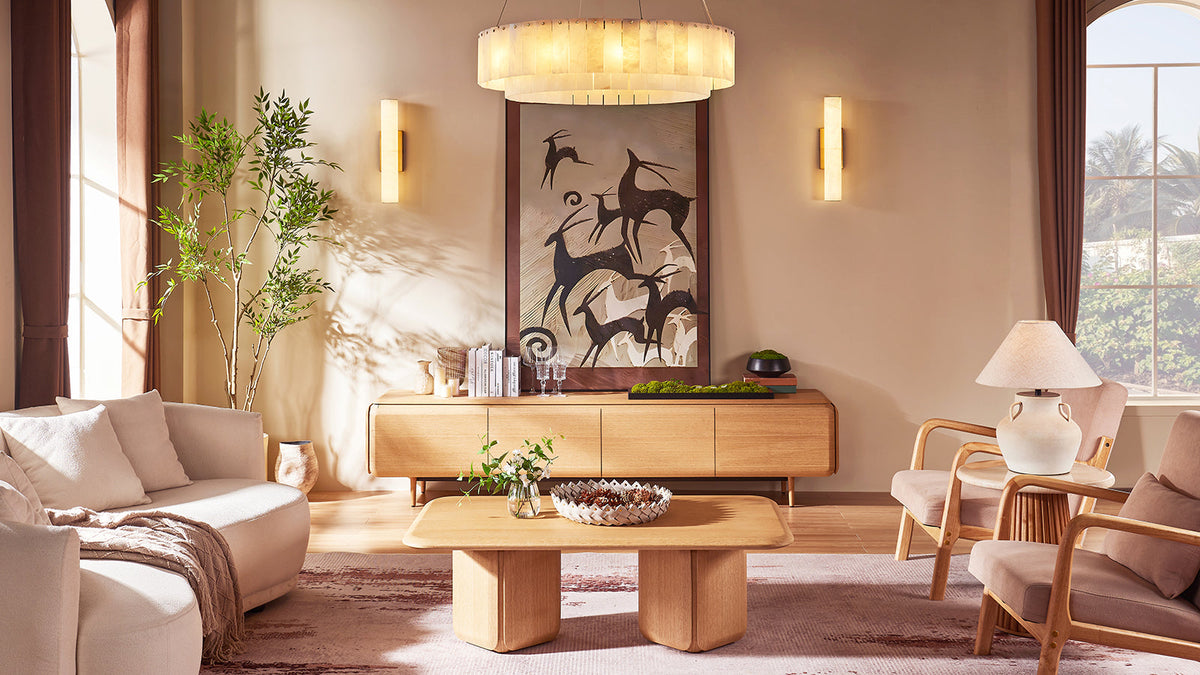
How to Choose a Media Console That Fits Your TV and Living Room
Learn how to choose the right media console for your TV and living room, including width, height, storage, wall-mounted TV placement, cable management, and style.
Read moreabout How to Choose a Media Console That Fits Your TV and Living Room
Share:
How to Choose Warm Lighting for Fall and Winter Interiors