


Your cart is currently empty.
A nightstand may be one of the smallest pieces of furniture in the bedroom, but its proportions can have a surprisingly large effect on how comfortable and balanced the space feels.
Too low, and reaching for a glass of water or phone becomes awkward. Too high, and the bedside arrangement can feel visually disconnected from the mattress. Too small, and there may not be enough room for everyday essentials. Too large, and the nightstand can overwhelm the bed or restrict movement.
The best nightstand is therefore not simply the one that matches the bed. Height, width, storage, material, lighting, and available floor space should all work together.

The terms are often used interchangeably today, but there can be a slight difference in how the furniture is designed.
A bedside table may simply provide a small surface beside the bed, while a nightstand often includes enclosed storage such as drawers or cabinets.
In practice, the better question is not what the piece is called, but what you need it to do.
If you only need space for a lamp and a book, a compact bedside table may be enough. If you want to hide chargers, medication, glasses, cables, journals, and other daily items, drawers can make the bedroom feel significantly calmer.
Nightstand height should usually be considered in relation to the top of the mattress rather than the bed frame alone.
A bedside surface that sits reasonably close to mattress height is easier to reach while lying or sitting in bed. It also creates a more balanced visual line between the bed and the furniture beside it.
This does not mean every nightstand must align perfectly with the mattress. A small difference can still work well, especially when the lamp, headboard, or surrounding furniture adds vertical balance.
Width depends on both the bed and the amount of open space beside it.
A large upholstered bed or king-size bed usually has enough visual weight to support a wider nightstand. A compact bed in a smaller bedroom may look more balanced with a narrower piece.
The nightstand should also leave enough space for drawers and doors to open comfortably without colliding with the bed, wall, closet, or nearby furniture.
Two-drawer nightstands are popular because they offer a useful balance between surface space and concealed storage.
The top drawer can hold items used every night, while the lower drawer can store less frequently accessed objects.
This layout is especially practical if you want the top of the nightstand to remain relatively uncluttered.

A wider two-drawer design can work particularly well beside a queen or king bed when the room has enough floor space. The concealed storage helps keep everyday bedside items out of sight while preserving a generous top surface.
Explore Murphy Nightstand →Limited bedroom space does not mean eliminating bedside furniture entirely.
The key is to choose a nightstand with a smaller footprint while still providing enough function for everyday use.
In narrow bedrooms, width matters particularly because the area between the bed and the wall may already be limited.
Rounded corners and curved fronts can also help compact furniture feel less intrusive when walking around the bed.

A narrower 18-inch design can provide bedside storage without consuming as much floor space, making it useful for guest rooms, apartments, and bedrooms with tighter clearances.
Explore Valencia Nightstand →A compact nightstand does not always have to sacrifice storage capacity.
Taller or more vertically organized designs can make better use of a narrow footprint, especially when the bedroom does not have room for a wider cabinet.
The tradeoff is that the top surface may be smaller, so it becomes more important to keep bedside styling simple.

The answer depends on what you keep beside the bed.
Bedrooms often contain large areas of soft, relatively simple surfaces: bedding, upholstered headboards, rugs, and curtains.
A textured nightstand can introduce contrast without requiring more decorative objects.
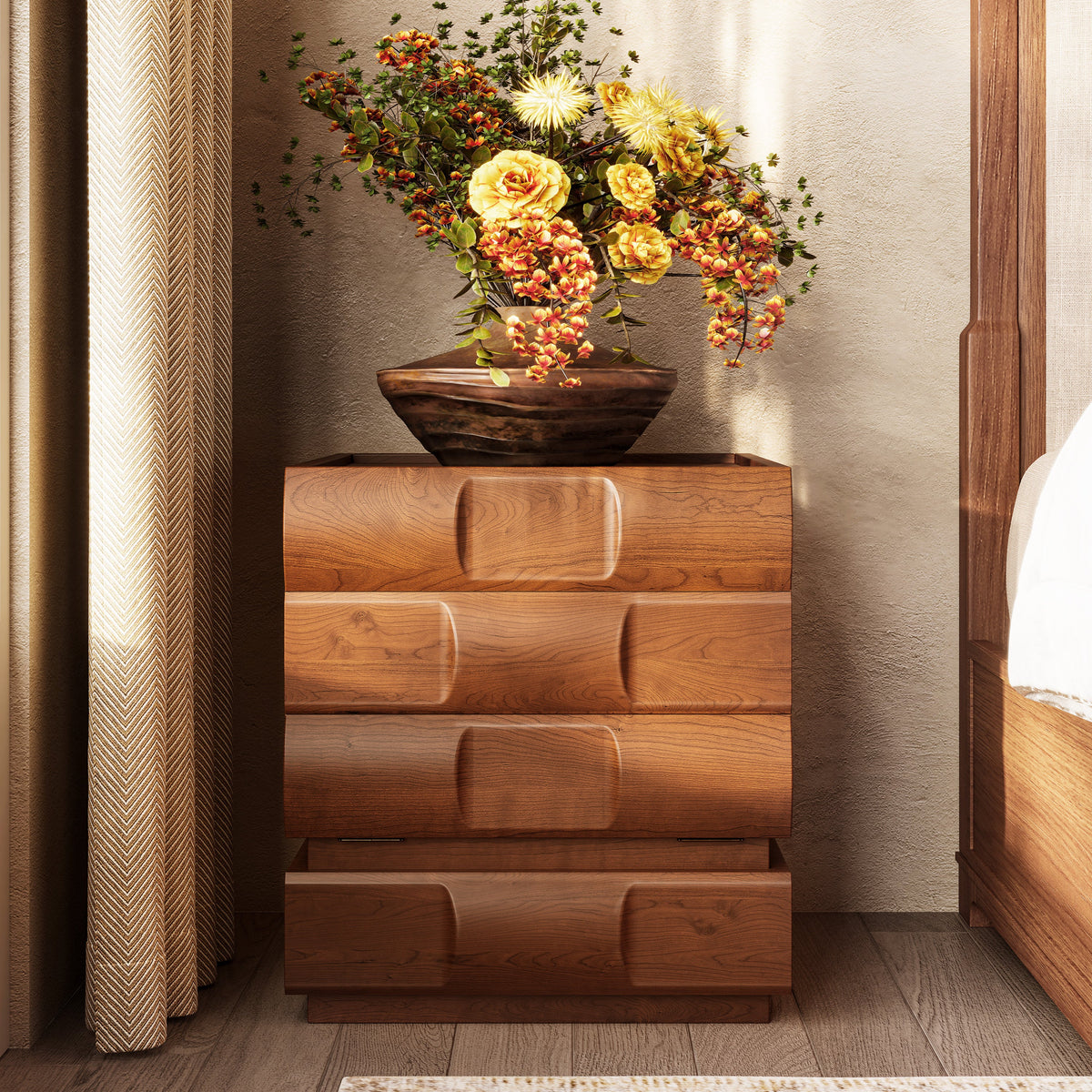
Embossed fronts, carved details, fluting, and visible wood grain create depth through light and shadow, making a small furniture piece feel more intentional.

A sculptural embossed front can turn a compact nightstand into a stronger design feature while keeping the overall furniture footprint relatively small.
Explore Terra Cube Nightstand →When the nightstand itself has strong texture, the top does not need many accessories.
A lamp, one book, and a small object may be enough. This allows the furniture design to remain visible while keeping the bedside area easier to use.

Material has a strong influence on how a nightstand feels beside the bed.
Walnut and warmer oak tones can make a bedroom feel more relaxed and grounded. Natural grain also pairs easily with cream, beige, taupe, and other neutral bedding.
Deeper wood tones create stronger contrast beside light bedding and can make a bedroom feel more architectural or formal.
Stone introduces another layer of texture and can create a more substantial, polished appearance. It is especially effective when the rest of the bedroom relies heavily on soft materials.
Mixed-material designs can combine the warmth of wood with the cleaner visual character of stone.

A stone-topped nightstand can add material contrast beside upholstered beds and soft bedding, while fluted detailing helps the cabinet maintain a warm furniture character.
Explore Sinclair Nightstand →No. Matching nightstands create symmetry and are often the easiest choice for a primary bedroom, especially when the bed and headboard are centered on the wall.
But mismatched bedside tables can also work when they share enough visual characteristics.
For example, two different nightstands may still feel connected if they are similar in height, use related wood tones, or repeat the same metal finish.
Two different bedside tables can still look balanced when their height, scale, and material language relate to one another.
The amount of available nightstand surface depends heavily on the type of lighting used beside the bed.
A traditional table lamp needs enough room for its base while still leaving space for a phone, book, water, or other essentials.
Wall sconces and bedside pendants free the top surface entirely, which can be particularly useful with smaller nightstands.
In compact bedrooms, changing the lighting can sometimes allow you to choose a narrower nightstand without sacrificing usability.
The most useful bedside surface should not be completely covered with decoration.
Start with the objects you actually use, then add only a small amount of styling.
A nightstand generally works best when its top is reasonably close to the top of the mattress. A small difference is usually fine, but a very large height difference can make the furniture less convenient to use.
Width depends on bed size and available floor space. Larger beds can usually support wider bedside furniture, while compact rooms may need narrower designs that preserve walking clearance.
Not necessarily. Two nightstands create symmetry and provide storage for both sides of the bed, but smaller bedrooms may only have room for one.
No. Different nightstands can work together if their heights, visual weight, wood tones, or other design details create enough connection.
One or two drawers are enough for many bedrooms. Choose additional storage only when you genuinely need the nightstand to hold more items.
A narrow design with useful vertical storage is often a good choice. Wall sconces or pendant lights can also free up the tabletop and make a smaller nightstand more practical.
Common items include chargers, glasses, medication, notebooks, books, remotes, skincare, and other objects used before sleep or after waking.
Start with mattress height and available floor space, then decide how much storage you actually need.
From there, choose a width, material, and design that balances the bed without crowding the room. When the proportions are right, even a small bedside table can make the entire bedroom feel more complete.
Explore Houlte Nightstands →
How to Choose the Perfect Nightstand for Your Bedroom: Size, Height, Storage, and Style
Learn how to choose the right nightstand for your bedroom, including ideal height, width, storage, small-space options, materials, styling, and bedside lighting tips.
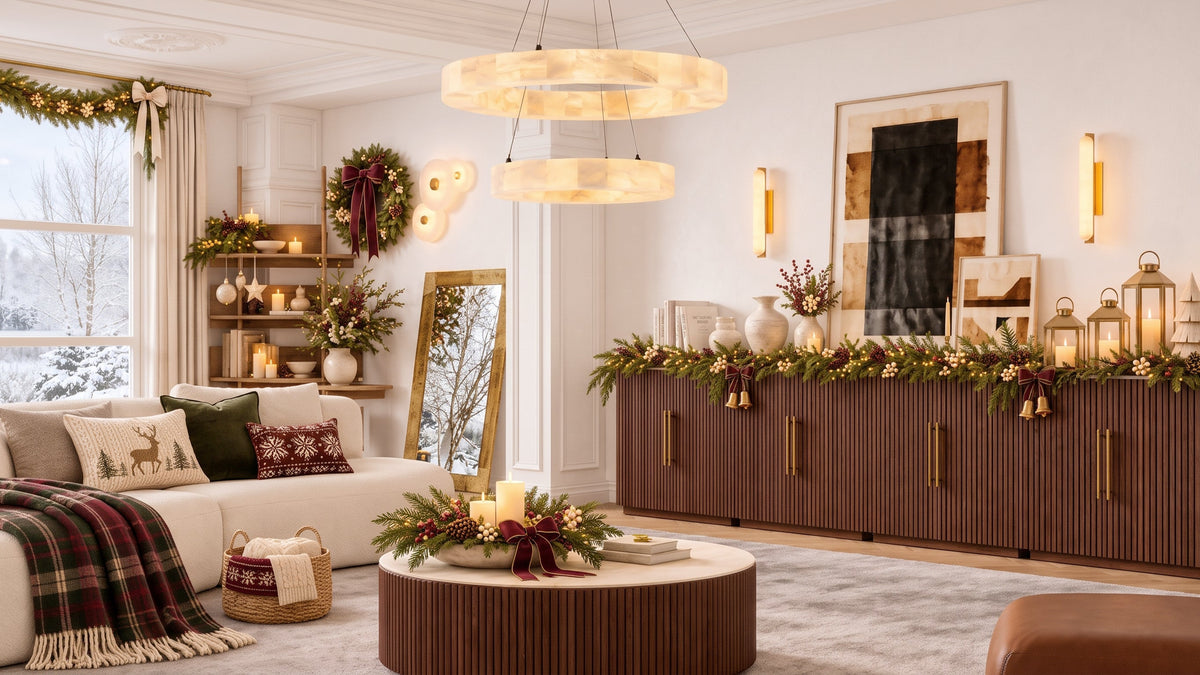
How Modular Storage Can Make Your Living Room More Organized for the Holidays
Discover how modular storage cabinets can organize a living room for the holidays, with tips on layout, closed storage, TV walls, materials, and flexible furniture combinations.
Read moreabout How Modular Storage Can Make Your Living Room More Organized for the Holidays
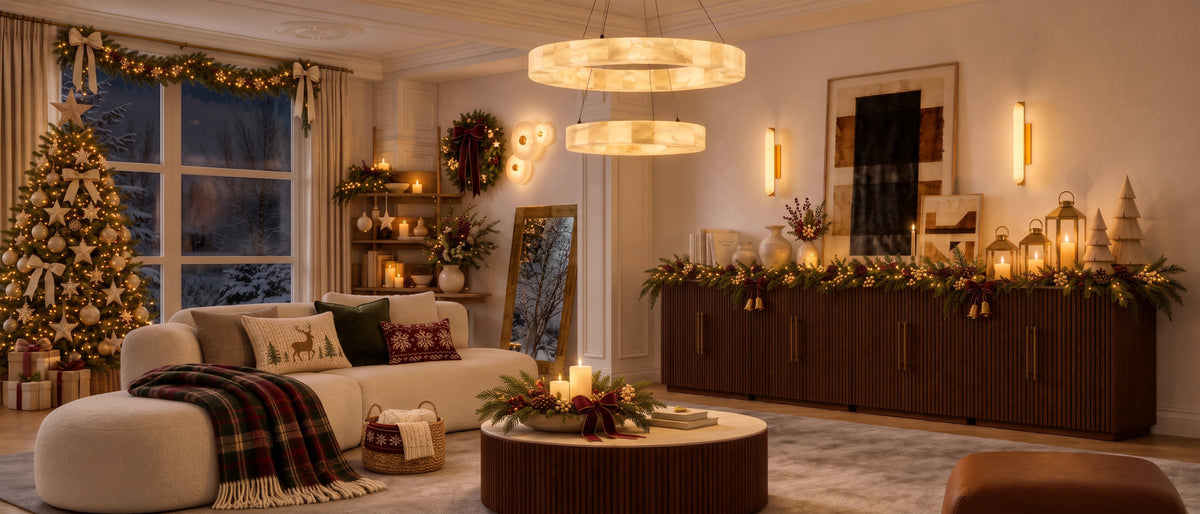
How to Make Your Living Room Feel Warm and Guest-Ready for the Holidays
Create a warm, guest-ready living room for the holidays with layered lighting, natural wood furniture, thoughtful layouts, and simple seasonal updates—plus Houlte’s Black Friday savings.
Read moreabout How to Make Your Living Room Feel Warm and Guest-Ready for the Holidays
Share:
How Modular Storage Can Make Your Living Room More Organized for the Holidays