


Your cart is currently empty.
Some lighting simply brightens a room. Translucent resin lighting changes how the room feels by turning the shade itself into a softly glowing visual presence.
Instead of exposing a concentrated point of light, an alabaster-inspired resin shade filters illumination through its clouded surface. The effect feels warmer, calmer, and more dimensional—especially after dark, when subtle internal texture begins to emerge.
HOULTE’s resin lighting is made with decorative resin, not natural alabaster. It reinterprets the milky translucency and atmospheric glow associated with alabaster in a versatile material designed for modern lighting forms.

A translucent resin shade surrounds and filters the light source, helping spread illumination across a broader surface. As light travels through the material, the shade itself appears luminous and internal texture becomes more visible.
This creates a warm ambient effect rather than the sharper visual contrast associated with a directly exposed bulb.
Clear glass often draws attention to the bulb, while an opaque metal shade primarily redirects light away from its surface. Translucent resin behaves differently: it participates in the illumination.
Because light passes through the material, the eye sees a glowing surface rather than only a concentrated source. This helps soften harsh transitions between bright and dark areas and makes the fixture feel more integrated into the room.
Diffused does not mean guaranteed glare-free. Visual comfort still depends on the fixture design, bulb position, light output, shade thickness, viewing angle, and surrounding room. Review the individual product specifications before selecting a resin fixture as the primary source of light.
The defining moment of translucent resin happens when the light turns on. During the day, an alabaster-inspired resin shade may appear pale, quiet, and sculptural. After dark, veining, cloud-like layers, and tonal depth become more visible from within.

Lighting affects more than visibility. It changes how materials, color, and proportion are perceived. A softly diffused shade can make warm wood appear richer, neutral textiles feel more inviting, and hard architectural surfaces feel less severe.
For a composed interior, pair translucent resin lighting with oak or walnut, linen, wool, ceramic, plaster-like walls, brushed brass, soft bronze, or matte black. These finishes support the shade’s gentle luminosity without competing with it.
Combine resin chandeliers, pendants, sconces, or flush mounts with secondary lamps and focused task lighting. This lets the resin provide atmosphere while other sources support reading, cooking, grooming, or detailed work.
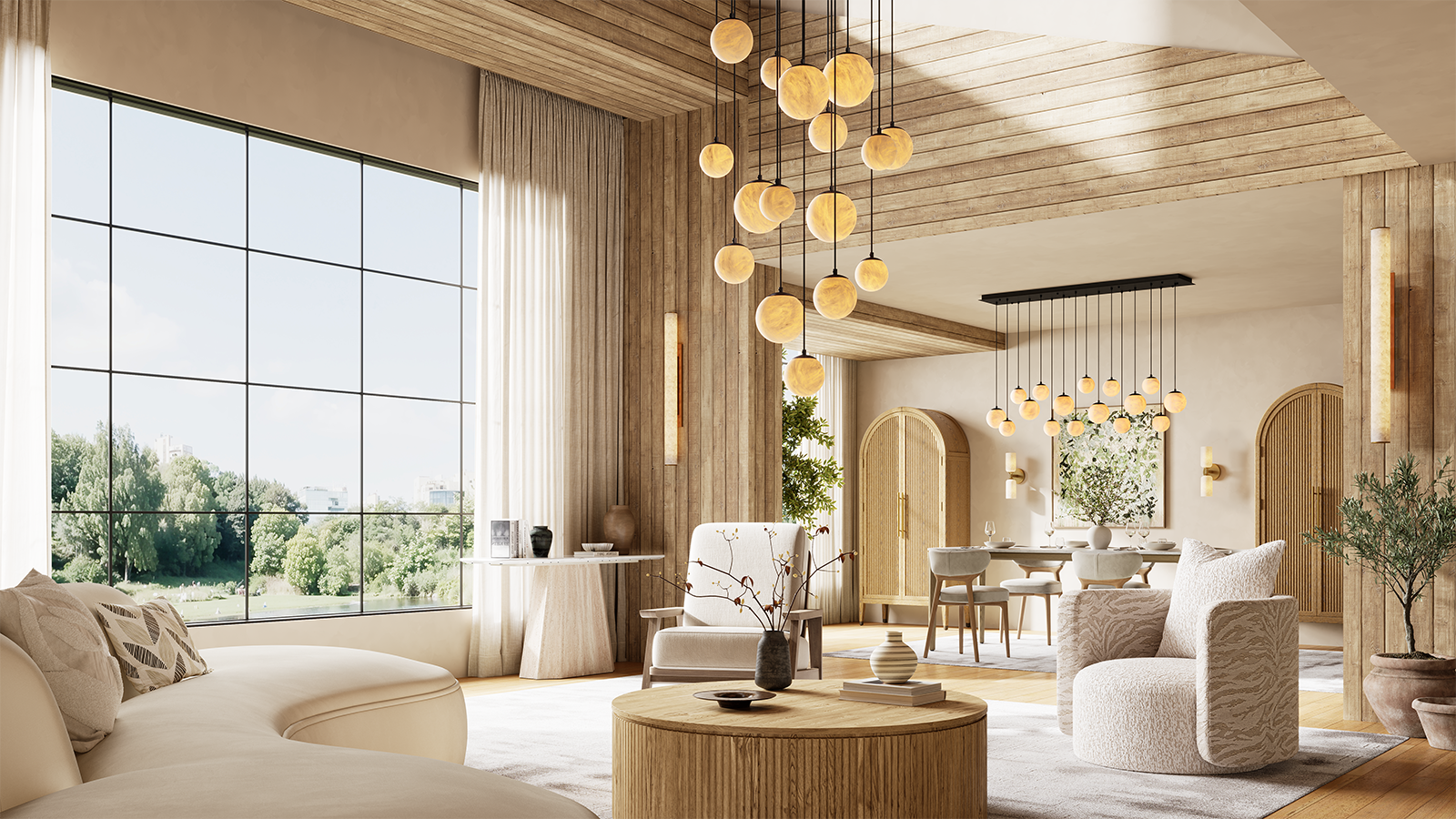
The character of diffused light changes with the way resin surrounds the source. A ribbed shade creates a gentle vertical rhythm, while suspended globes build a more layered field of illumination.
Axis combines twin hand-carved resin shades with a slim metal center to create a balanced, softly diffused wall light. Its 13.9-inch profile works naturally beside a vanity mirror, along a hallway, near a bedside, or as a repeated architectural accent, with gold and black finish options.
Twin resin shades13.9-inch profileGold or black

Luminare pairs a compact cylindrical profile with a fluted alabaster-look resin shade. The ribs give the illuminated surface a gentle vertical rhythm, while the adjustable drop and choice of brass or black hardware make it easy to place beside a bed, above a counter, or in a small reading corner.
Fluted resin shadeAdjustable dropCompact accentElviora arranges suspended resin globes around a round canopy. The repeated points of softened light create a balanced focal point for dining rooms and living spaces while keeping the overall glow calm and cohesive.
Round canopySoft rhythmDining glow

Sylvara surrounds a softly glowing central globe with a botanical leaf-shaped resin form. The sculptural frame catches the light and reveals its organic texture, adding warm ambience and a distinctive decorative accent to living rooms, bedrooms, reading corners, and hallways.
Botanical resin frameDiffused globe lightSculptural accentTranslucent resin lighting uses a light-permeable resin shade that filters illumination through the material. Depending on the design, the shade may include alabaster-inspired veining, cloudy layers, fluting, or tonal depth.
No. Alabaster-inspired resin is a manufactured decorative material designed to evoke aspects of alabaster’s pale color, veining, and translucent glow. It should not be described as natural alabaster or genuine stone.
A translucent resin shade can help soften the appearance of direct brightness, but visual comfort depends on the full fixture design, light output, shade thickness, bulb position, viewing angle, and room. It is more accurate to describe the light as diffused than guaranteed glare-free.
The resin influences diffusion and visual softness, while the bulb or integrated LED determines color temperature. Review the product specifications for the listed Kelvin value and light-source details.
It depends on the fixture and room. Many resin lights are intended to create ambient illumination. Kitchens, work areas, bathrooms, and larger rooms may still require additional task or accent lighting.
Translucent resin changes the relationship between the shade and the light. The material becomes luminous, internal texture gains depth, direct brightness feels softer, and the room takes on a warmer, more considered atmosphere.
By day, the fixture is a pale decorative object. After dark, it becomes part of the glow.
Explore HOULTE Resin Lighting →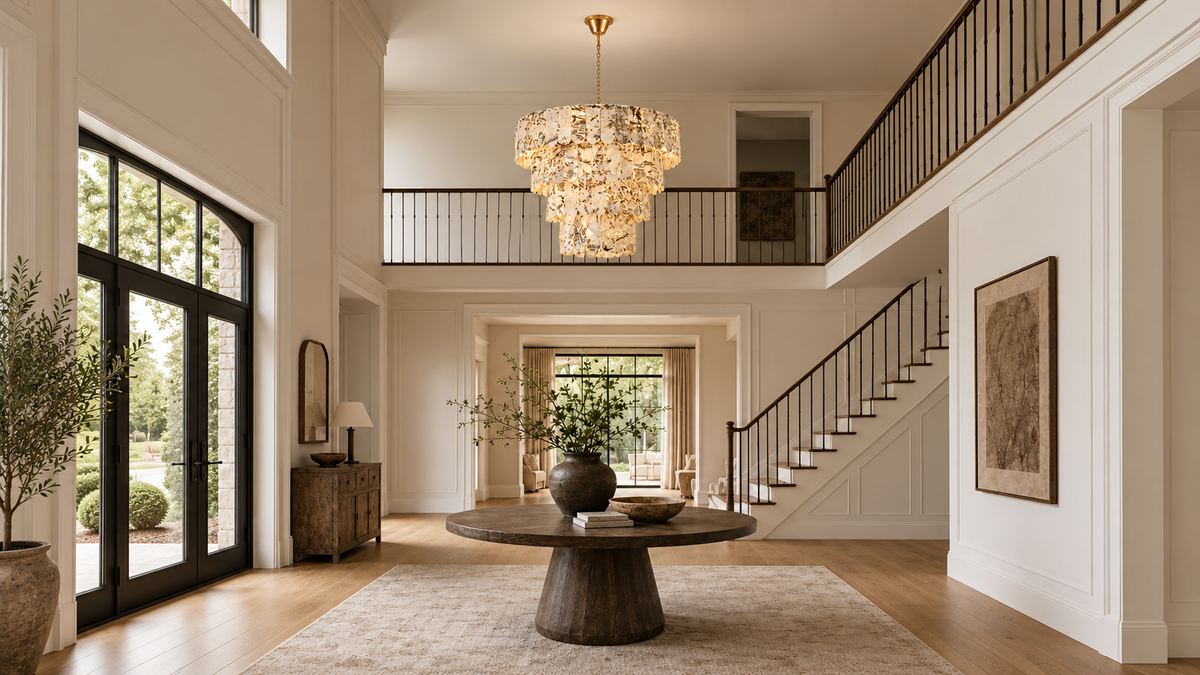
How Marble Patterns Change the Look of a Chandelier
Discover how white, green, blue, amber, and high-contrast marble patterns change the mood of a chandelier, with styling tips for choosing the right stone lighting for modern interiors.
Read moreabout How Marble Patterns Change the Look of a Chandelier
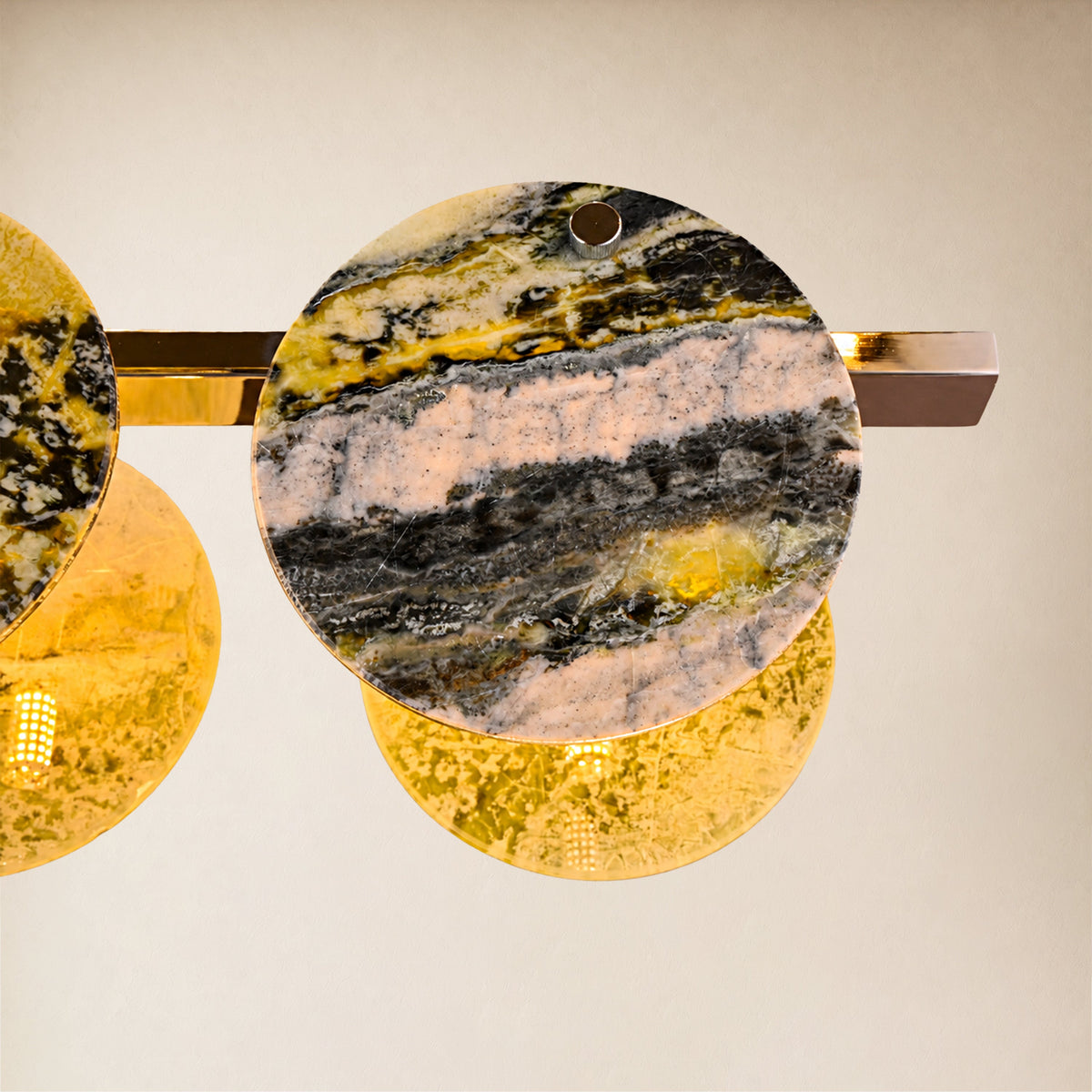
How to Choose a Linear Marble Chandelier for a Kitchen Island or Dining Table
Learn how to choose a linear marble chandelier for a kitchen island or dining table, including sizing, hanging height, stone color, open-concept styling, and modern lighting ideas.
Read moreabout How to Choose a Linear Marble Chandelier for a Kitchen Island or Dining Table
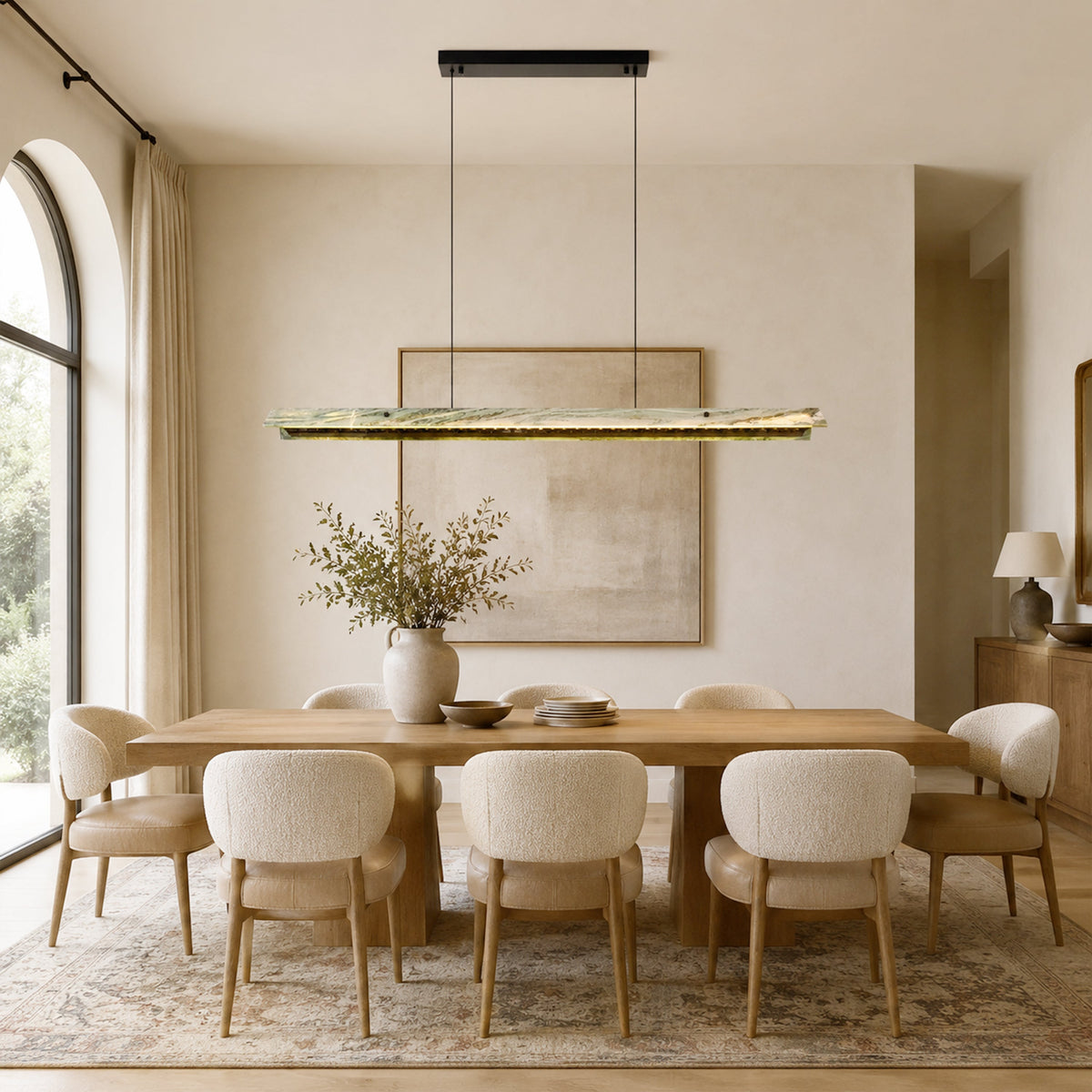
How to Choose a Marble Chandelier for Your Dining Room
Learn how to choose the right marble chandelier for your dining room, including round vs. linear designs, scale, ceiling height, stone pattern, and styling ideas for modern interiors.
Read moreabout How to Choose a Marble Chandelier for Your Dining Room
Share:
KD Furniture Installation Guide: How to Protect Your Furniture Before, During, and After Assembly
The Case for HOULTE Resin Lighting in Real Homes