



Your cart is currently empty.
A dark wood bed already does a lot of work in a bedroom. It brings gravity, warmth, and a kind of built-in structure that lighter bed frames often do not. That is why choosing the right nightstand color is less about "matching" and more about deciding what role you want the bedside pieces to play.
Do you want them to soften the room?
Brighten it?
Echo the bed?
Break it up with contrast?
At Houlte, we usually approach dark wood beds as a strong visual anchor. Once that anchor is in place, the best nightstand color is the one that creates balance around it—not competition, and not bland repetition either. Below, we are sharing the color directions we think work especially well, plus a few styling cues for making the pairing feel considered rather than accidental.
When a bed is dark wood—walnut, espresso, dark oak, mocha, or coffee-toned veneer—the nightstand should usually do one of three things:
What tends not to work as well is choosing a bedside color that is close to the bed color but not quite right. Near-matches often feel more awkward than either a true match or an intentional contrast.
Soft gray is one of the easiest ways to modernize a dark wood bed without draining warmth from the room. It lightens the bedside area without going stark, feels calmer than pure white, plays well with black accents and brushed metals, and helps dark wood feel more architectural and less heavy.
We especially like soft gray in bedrooms with charcoal or taupe bedding, greige walls, matte black lighting, and layered linen textures. The key is to keep the gray warm enough to relate to the wood. A cold, blue-based gray can make a dark bed feel harsher. A stone gray, mushroom gray, or warm ash gray tends to be more forgiving.
White is the cleanest contrast you can put next to a dark wood bed. It creates separation instantly and makes the bed frame stand out. It works best when the room needs visual lift, you want a fresher brighter bedroom, the bedding palette is neutral and airy, or the bed itself is visually heavy and needs relief nearby.
That said, not every white is the same. We usually favor creamy white, alabaster, warm off-white, and stone-white tones. Those shades keep the contrast crisp without making the room feel clinical.
If you want a lighter bedside look but still want material richness, a piece with a stone or sintered-stone top can often bridge the gap beautifully.

The stone element helps brighten the palette while the oak structure keeps the pairing from feeling too cold next to a dark wood bed.
View product →Earthy green is one of our favorite directions with dark wood because it adds depth without fighting the warmth already in the room. Against dark wood, earthy green often creates a room that feels layered, moody, and quietly current.
We see this palette working especially well with brass or antique bronze details, textured neutrals, warm white bedding, natural woven elements, and plaster, linen, and matte ceramics. If you are not choosing a green nightstand itself, you can still build this color relationship through accessories, art, a lamp base, or wallpaper behind the bed.
This phrase matters less as a literal furniture material and more as a mood reference. "Velvet-textured neutrals" suggests colors that feel soft, dimensional, and slightly enveloping rather than flat. These shades pair beautifully with dark wood because they soften its weight while preserving richness. They do not snap against the bed the way white does; they cushion it.
If the room is aiming for a more cocooning atmosphere, these are often the colors we trust most.
A nightstand does not need a bright color to stand out. In fact, with a dark wood bed, contrast often works better through finish, silhouette, or texture than through dramatic color alone.
When the bed is visually dense, even a subtle color difference can have impact if the form is strong.

Its mocha-brown finish and stone top sit comfortably beside a dark wood bed while adding variation through texture and surface contrast rather than a sharp color break.
View product →A dark wood bed does not have to be paired with a same-style nightstand. In fact, mixing styles often gives the room more life. A few combinations we like:
The trick is to keep some point of connection: similar undertones, repeated curves or lines, matching hardware family, or related scale. Style contrast feels interesting when tone and proportion stay under control.
When we are helping narrow down bedside color choices for a dark wood bed, we usually ask three things:
Those questions usually reveal the right palette faster than trying to memorize design rules. If the goal is brightness, look to warm whites, pale stone, and gentle grays. If the goal is depth, choose mocha, olive, taupe, or layered brown neutrals. If the goal is balance, look for mixed-material pieces that bring both warmth and lift.
Browse all nightstands →Yes—often a very good one. Vintage or vintage-inspired nightstands can work beautifully with dark wood beds because they tend to introduce shape, patina, or detailing that prevents the room from feeling too flat or too "set-like." We especially like vintage-leaning bedside choices when the bed is simple and heavy, the room needs softness, you want a collected look instead of a showroom match, or the palette is already grounded in warm tones. A vintage nightstand does not have to match the wood exactly. In many cases, a difference in finish is what gives the room character.
When making the final choice, we would weigh these in order:
The best bedrooms rarely rely on one-note matching. What makes a room feel elevated is usually a little more nuanced: a bed with presence, nightstands with purpose, and a palette that feels layered rather than formulaic.
With a dark wood bed, some of the most successful nightstand choices are not the most obvious ones. A soft gray can sharpen the room. A warm white can lift it. A mossy green can deepen it. A taupe or velvet-like neutral can quiet it in the best way.
That is the part we find most interesting: dark wood is not limiting. It is actually one of the easiest starting points for building contrast and texture well.
Sometimes that means contrast. Sometimes it means tonal depth. Sometimes it means a lighter surface or a softer neutral that gives the room room to breathe.
The best pairing is the one that makes the bed feel intentional—never isolated, never overmatched, and never too heavy for the space around it.
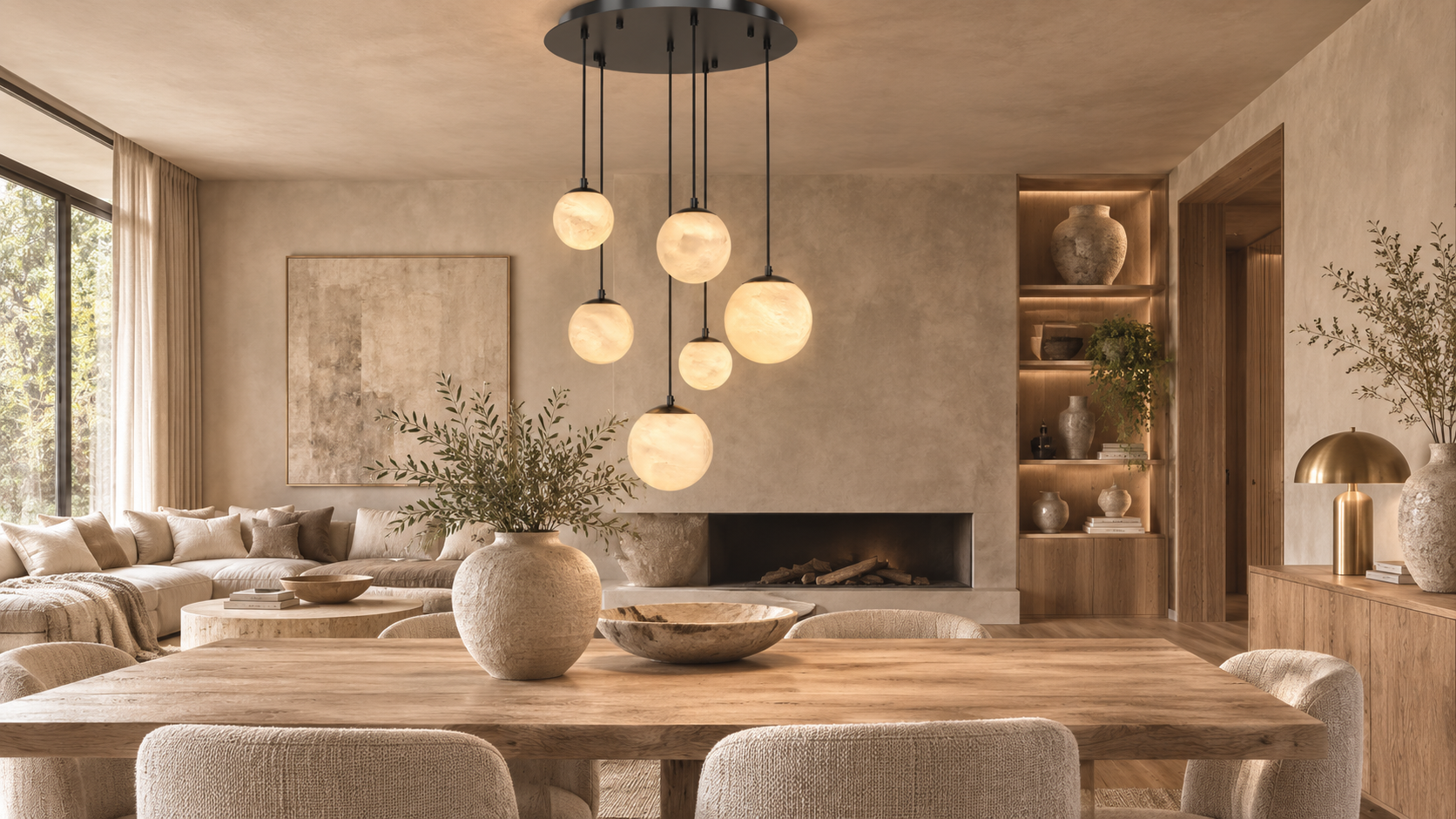
Resin vs. Alabaster Lighting: Which Material Is Right for your Home?
Read moreabout Resin vs. Alabaster Lighting: Which Material Is Right for your Home?
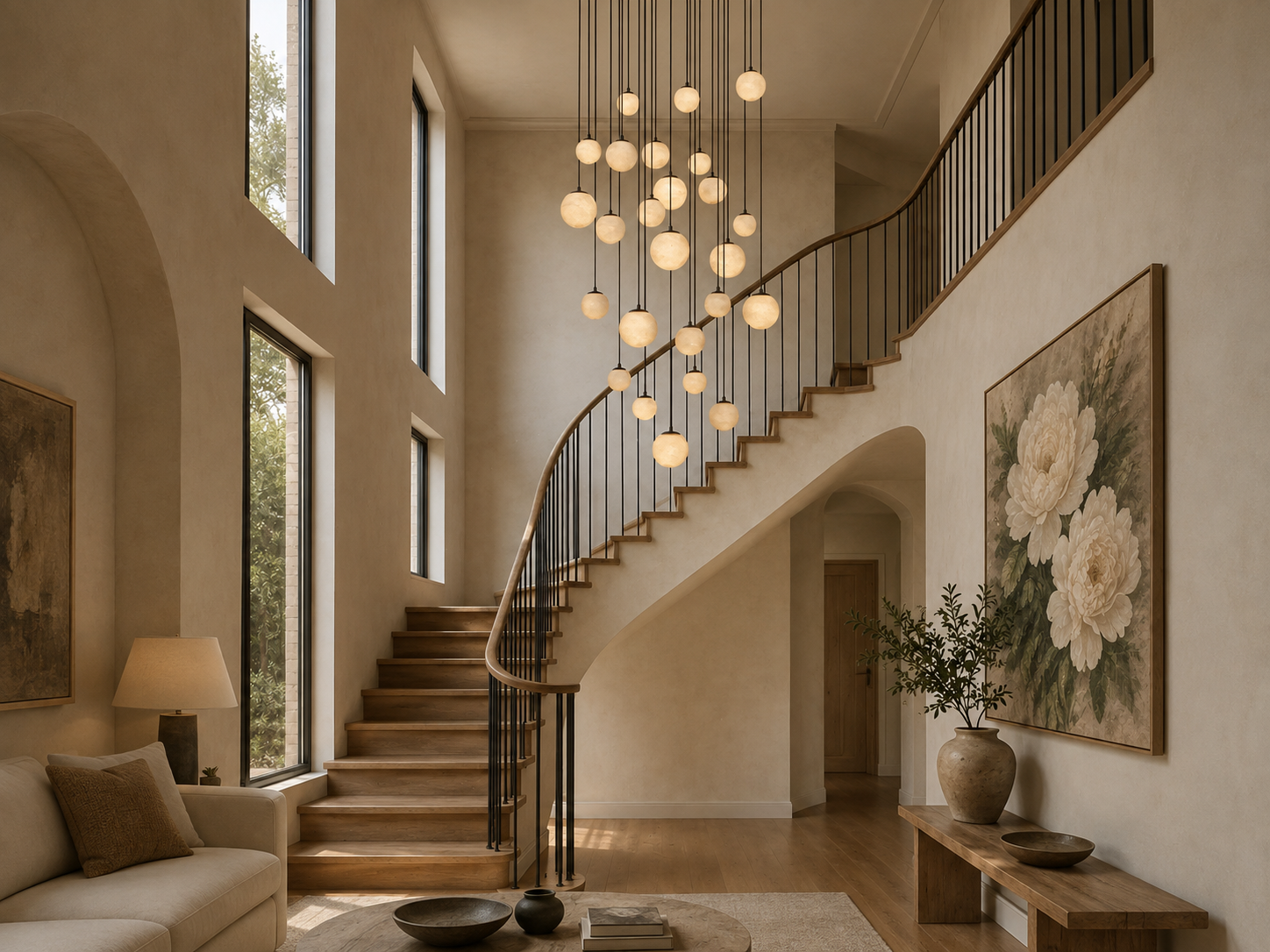
From Sconces to Statement Chandeliers: What Resin Makes Possible
Read moreabout From Sconces to Statement Chandeliers: What Resin Makes Possible
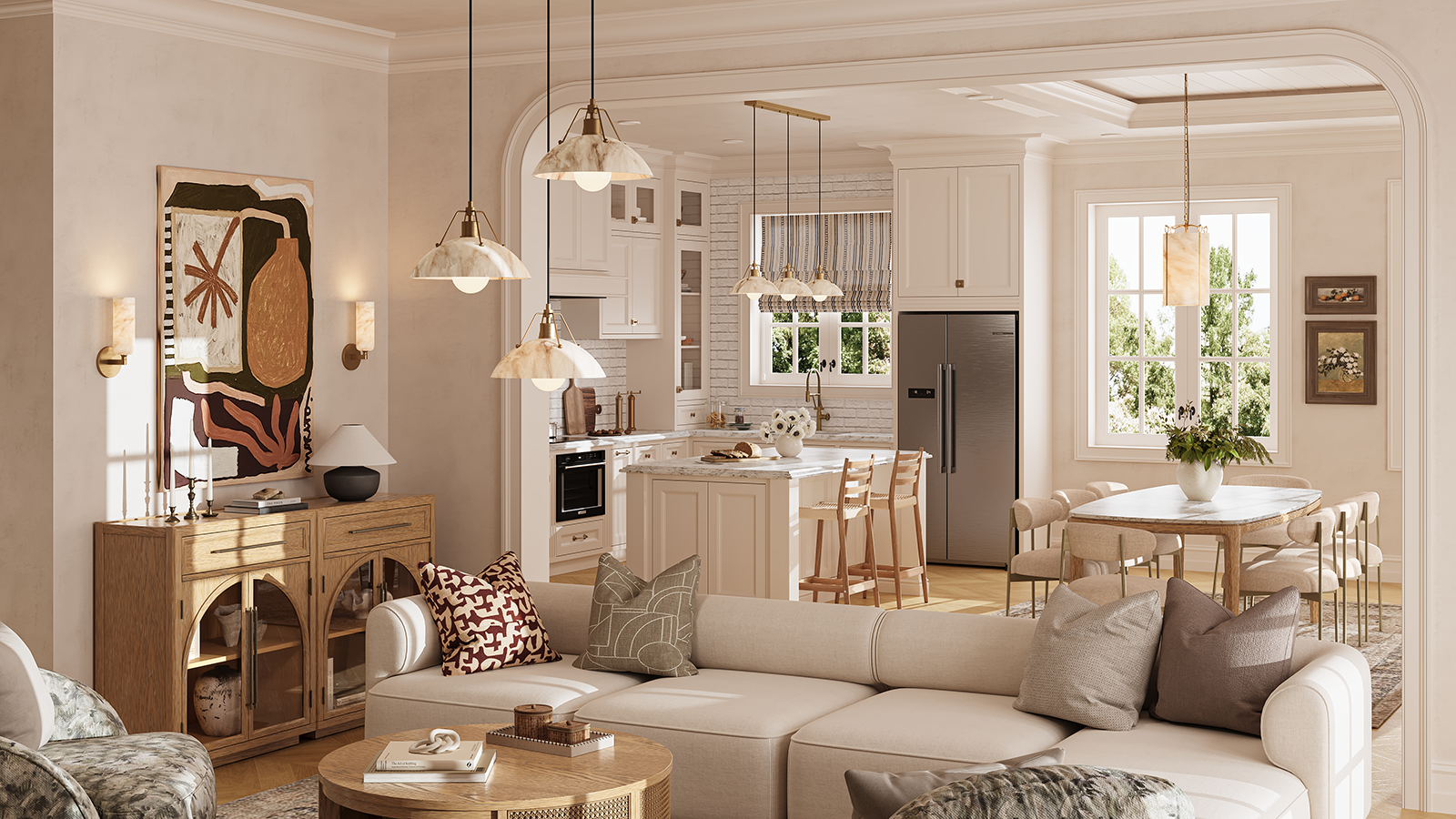
The Case for HOULTE Resin Lighting in Real Homes
Why does HOULTE resin lighting work so well in real homes? Explore its stone-inspired character, practical care, flexible forms, room-by-room applications, and the details to verify before choosing a fixture.
Read moreabout The Case for HOULTE Resin Lighting in Real Homes
Share:
Do Nightstands Have to Match? Exploring Your Options
What Size Rug for a Dining Room? A Complete Guide for Modern Homes