


Your cart is currently empty.
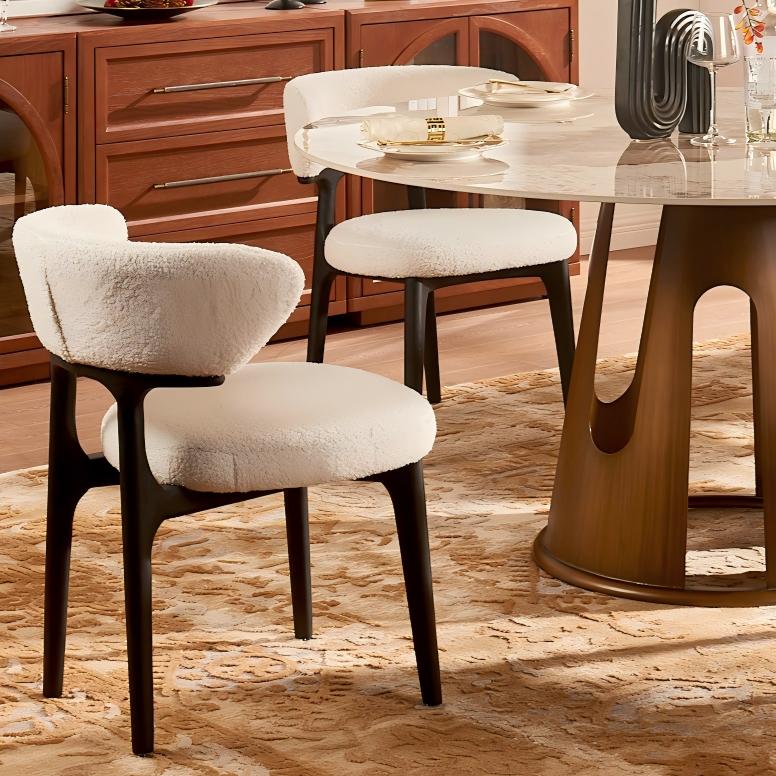
A dining room rug does more than sit under the table. It softens the room, defines the gathering zone, protects the floor visually, and makes family dinners and summer gatherings feel warmer, more layered, and more complete.
In a busy dining room, the table and chairs create function. The rug creates atmosphere. It visually gathers the furniture, softens sound, and gives the whole room a more finished feeling.
Family dinners and summer gatherings ask a lot from a dining room. Chairs move in and out, guests walk between the kitchen and table, children may sit or play nearby, and serving pieces travel across the room throughout the evening.
A rug can make all of that activity feel more intentional. It defines the dining area, adds softness underfoot, and introduces pattern or texture without requiring a full redesign.
The key is choosing a rug that works with the way people actually use the room. Size, pile height, color, pattern, and texture all matter when the rug sits beneath a dining table.
The most important dining room rug idea is also the most practical: choose a rug large enough for the chairs to remain on the rug when guests sit down or pull back from the table.
A rug that looks fine when the chairs are tucked in may feel too small once people begin using the room. During family dinners and summer gatherings, chairs move constantly. Guests pull them out, shift positions, stand up for seconds, and move back again.
If the rug is too small, chair legs can catch on the edge. This makes the dining area feel awkward and can interrupt the easy rhythm of hosting. A larger rug gives the whole room a smoother, more generous feeling.
For many dining rooms, the goal is to create a soft border around the table. The rug should frame the dining set instead of disappearing underneath it.
A dining room rug should feel connected to the table, but it does not need to copy it perfectly. The goal is balance: the table, chairs, rug, and room should feel like one complete setting.
A rectangular rug usually feels the most natural because it follows the length of the table and creates a strong dining zone.
Use the rug as a visual boundary. This helps the dining space feel intentional even when there are no walls around it.
Prioritize movement. The rug should make the space feel easier to use, not more delicate or formal.
Dining rooms are active spaces, especially during family dinners and summer gatherings. A good rug color should add beauty, but it should also feel livable.
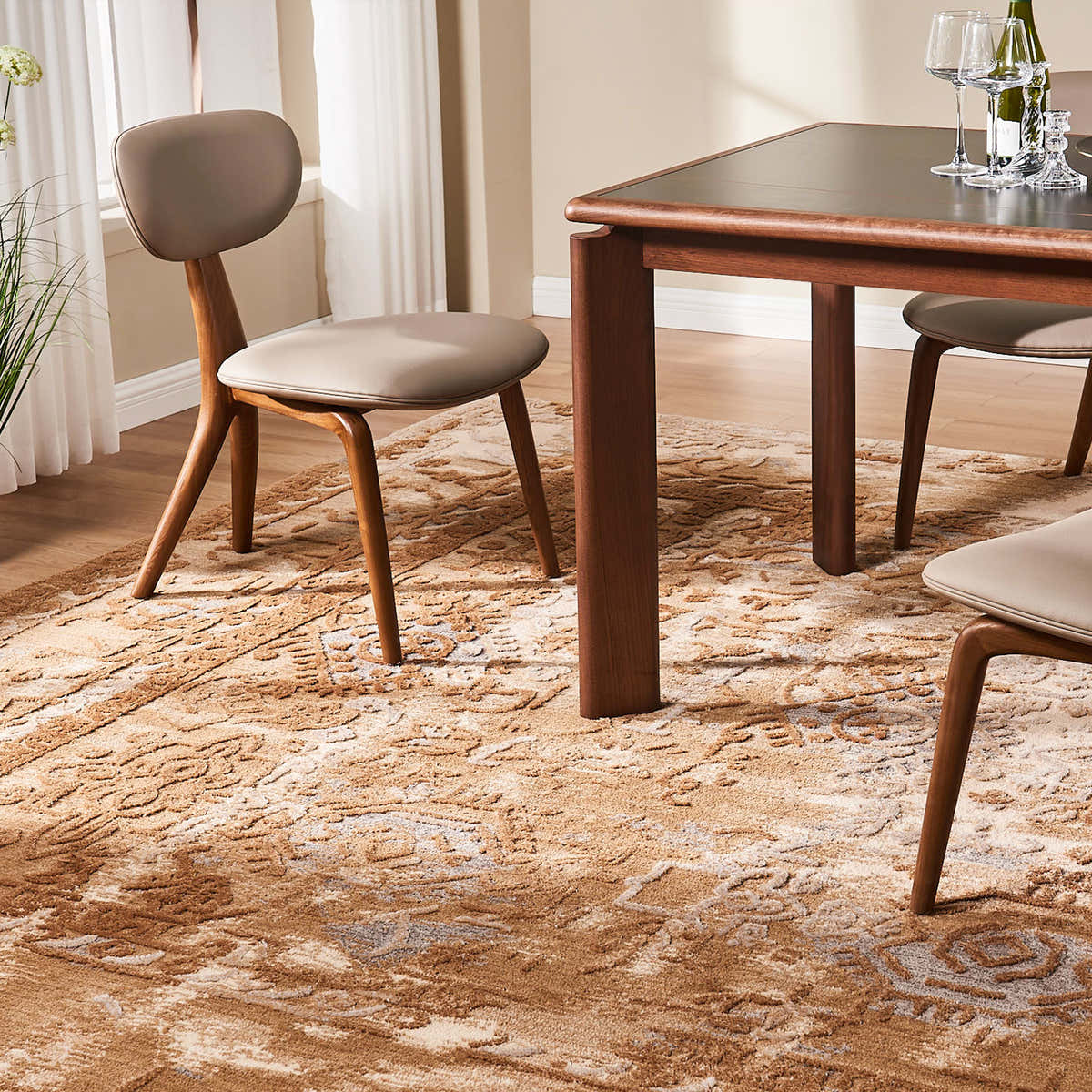
For dining rooms, texture is important. A rug should soften the room and add dimension, but it should not make the space feel hard to use.
Wool-blend rugs can bring warmth and structure to a dining room, while tonal designs help the space feel layered without becoming visually busy.
These rugs each bring a different mood to the dining room, from etched pattern to marble-inspired movement to raised relief texture.
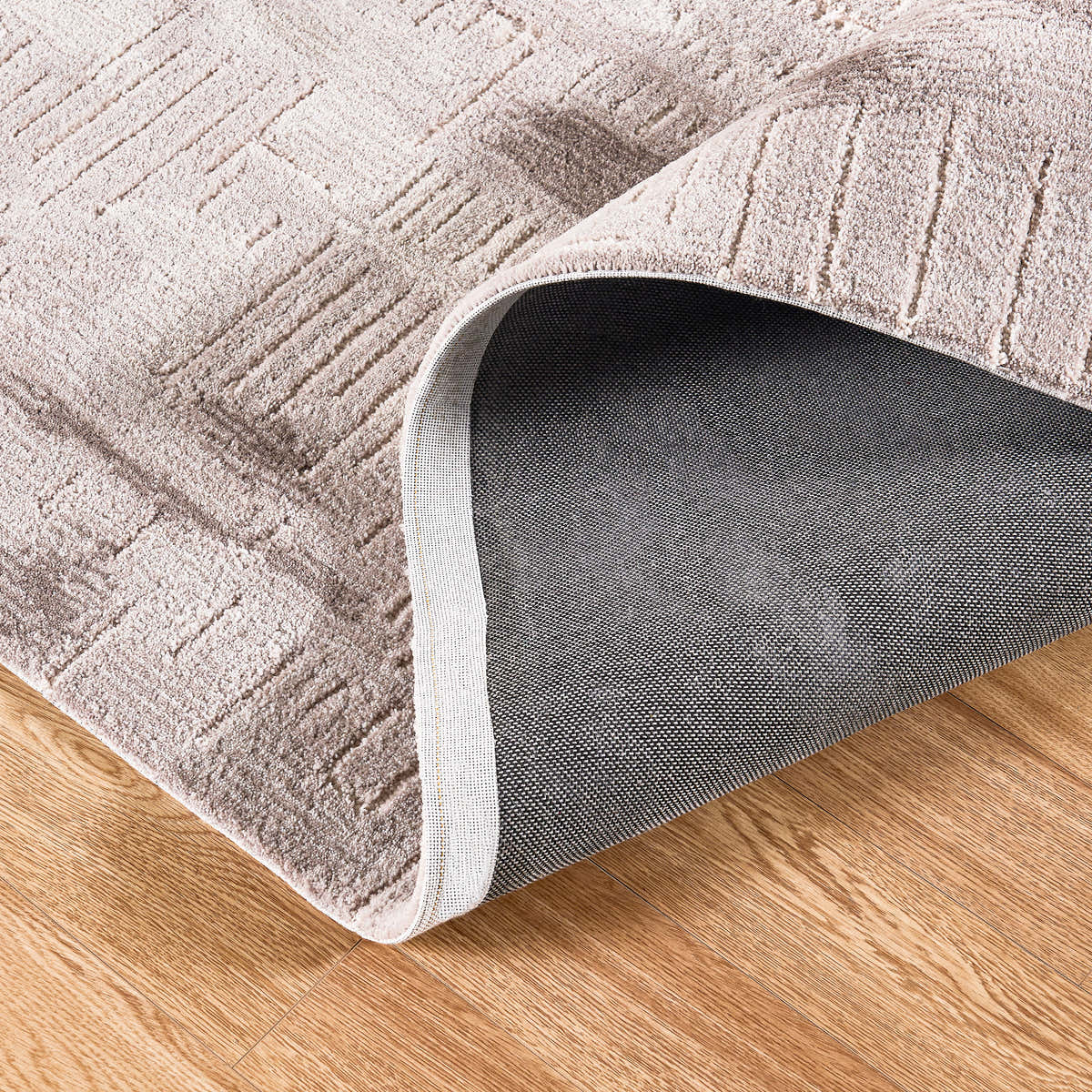
Marlow works well when the dining room needs more visual definition. Its etched design adds structure beneath the table while still feeling warm enough for family dinners and casual summer hosting.
View product →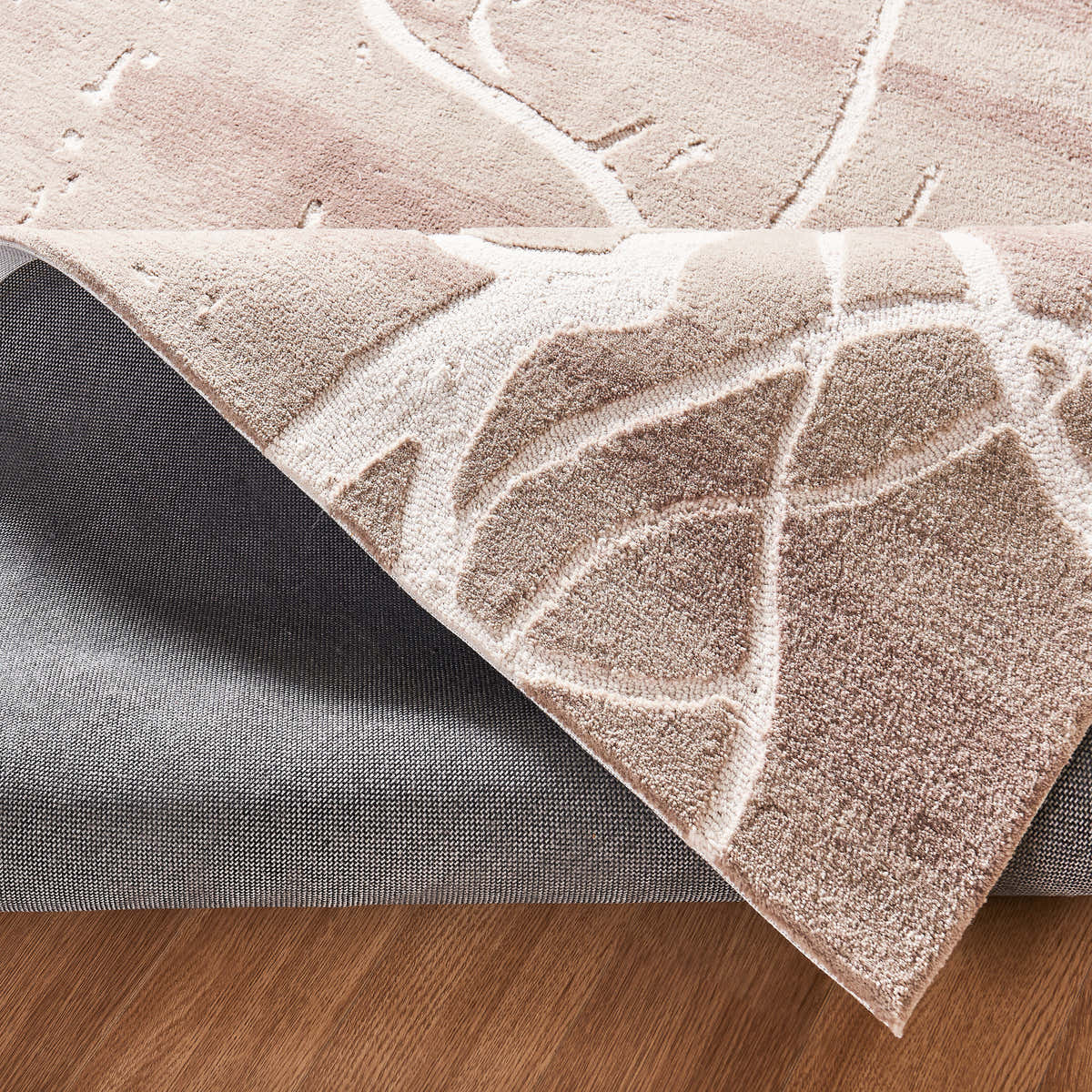
Caspian is a good choice for dining rooms that need softness without looking plain. The marble-inspired movement gives the floor a layered look and helps the room feel more relaxed during gatherings.
View product →Aurelian brings more texture to the dining room, making it useful when the space needs depth and quiet detail. It pairs especially well with warm wood, soft lighting, and simple table settings.
View product →Before choosing a rug for the dining room, think about how the space works during real meals, not only how it looks in photos.
A good dining room rug should be large enough for chairs to move comfortably, have a practical pile height, and use a color or pattern that feels forgiving during everyday meals and gatherings.
Yes. Ideally, the rug should extend far enough beyond the table so chairs remain on the rug when guests sit down or pull back from the table.
Yes. A tonal or softly patterned rug can be helpful in family dining rooms because it adds visual interest while making everyday activity feel less noticeable.
A rug defines the dining zone, adds softness, supports the table and chairs visually, and makes the room feel warmer and more complete for family dinners and summer gatherings.
The right rug makes the dining room feel softer, warmer, and more intentional. It gives the table a foundation, makes the room feel more complete, and helps family dinners and summer gatherings feel more welcoming.
Whether you prefer etched pattern, marble-inspired movement, or refined relief texture, a well-chosen rug can make the dining room feel ready for the moments that happen around the table.
Explore Rugs →```
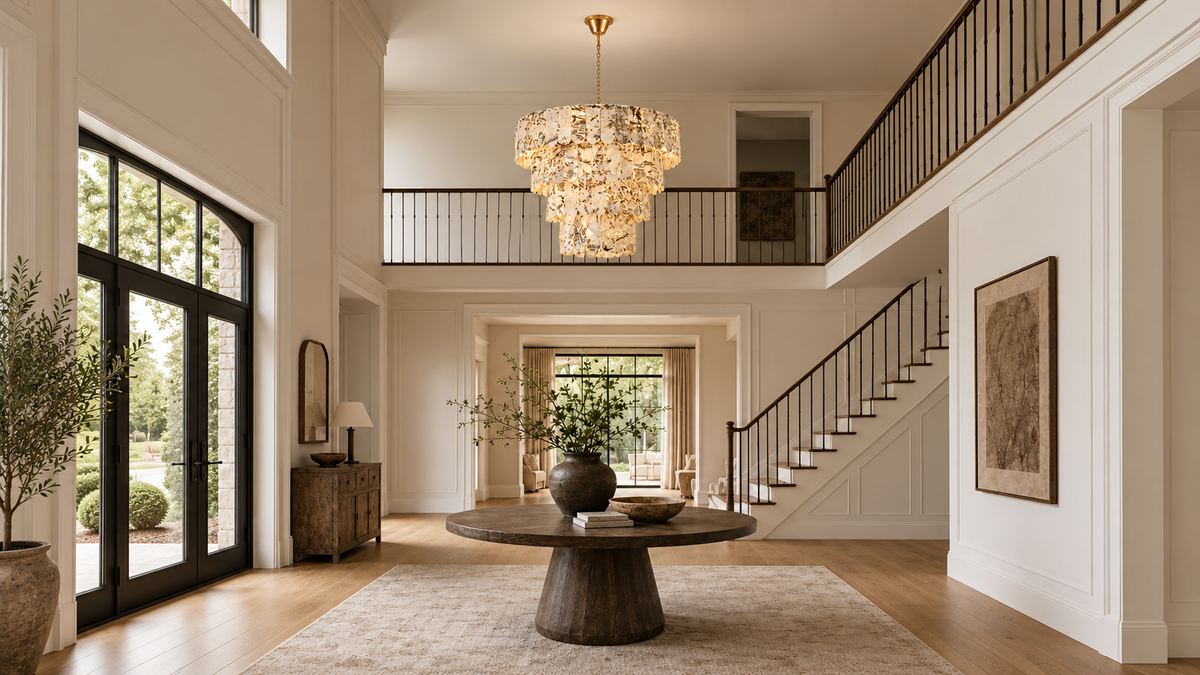
How Marble Patterns Change the Look of a Chandelier
Discover how white, green, blue, amber, and high-contrast marble patterns change the mood of a chandelier, with styling tips for choosing the right stone lighting for modern interiors.
Read moreabout How Marble Patterns Change the Look of a Chandelier

How to Choose a Linear Marble Chandelier for a Kitchen Island or Dining Table
Learn how to choose a linear marble chandelier for a kitchen island or dining table, including sizing, hanging height, stone color, open-concept styling, and modern lighting ideas.
Read moreabout How to Choose a Linear Marble Chandelier for a Kitchen Island or Dining Table
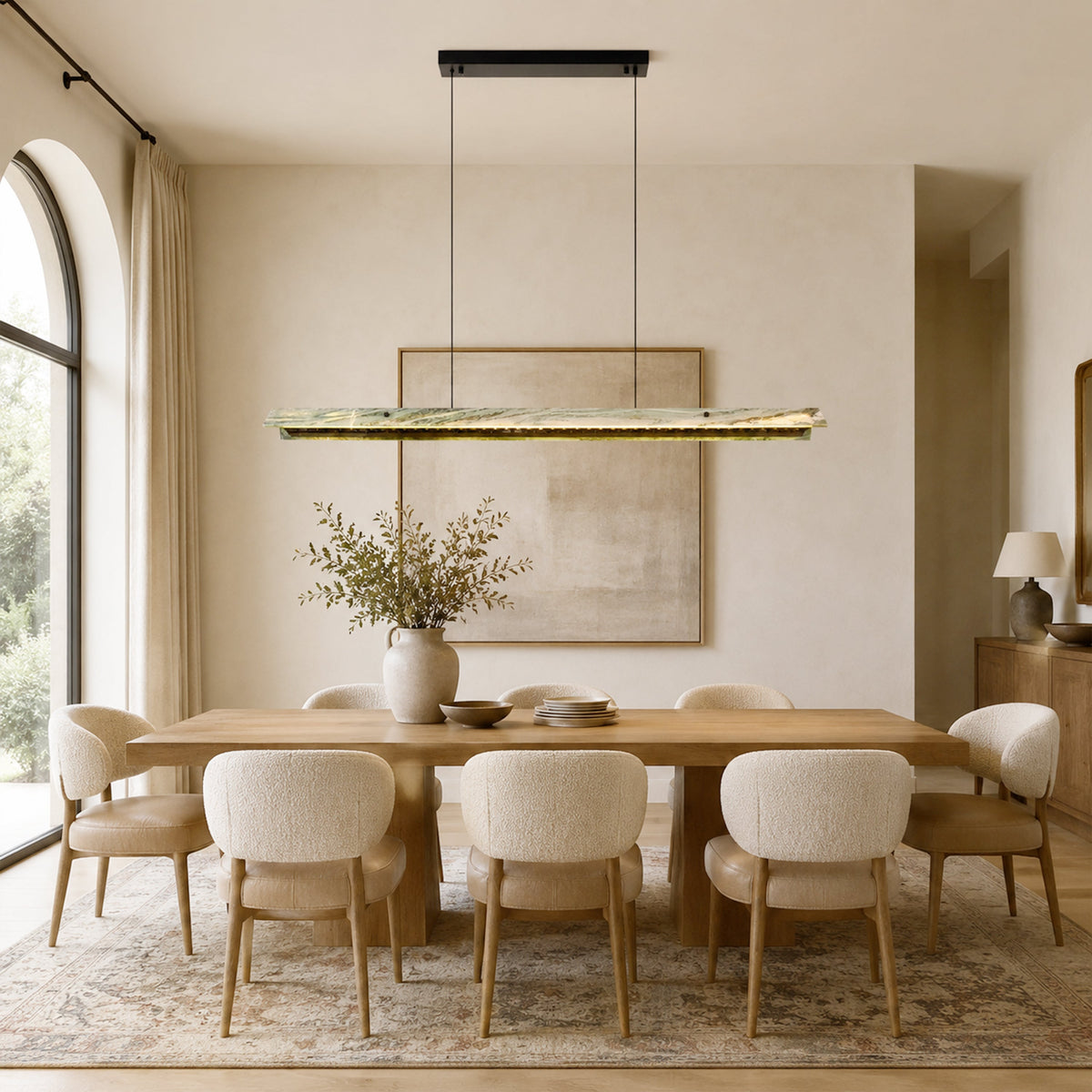
How to Choose a Marble Chandelier for Your Dining Room
Learn how to choose the right marble chandelier for your dining room, including round vs. linear designs, scale, ceiling height, stone pattern, and styling ideas for modern interiors.
Read moreabout How to Choose a Marble Chandelier for Your Dining Room
Share:
How to Get Your Dining Room Ready for Summer Hosting
Dining Room Lighting Ideas for Warm Summer Evenings